What Is BIAB? Builder in a Bottle Explained
Most clients who ask me about BIAB have already seen it somewhere and formed a vague impression that it’s somehow better than gel polish. That impression is broadly right, but the reason matters more than the conclusion.
What BIAB stands for
BIAB stands for Builder In A Bottle. It was invented in 2015 by Daisy Kalnina, a nail technician who started out in a Brighton salon and went on to build one of the most recognised nail brands in the UK. The name is trademarked by her company, The GelBottle Inc, which means BIAB refers specifically to their product.
Other brands make their own versions under different names, all grouped under the broader category of builder gel. All BIABs are builder gels, but not all builder gels are BIABs.
What BIAB actually is
BIAB is a thicker, denser gel than standard gel polish. Where gel polish sits on top of the nail as a thin colour coating, BIAB builds a structural layer over it. That layer creates an apex, a slight arch at the highest point of the nail, which distributes pressure across the nail rather than concentrating it at the tip. The practical result is a nail that resists breaking and chipping more effectively than gel polish alone.
It cures under a UV or LED lamp the same way gel polish does. It can be soaked off with acetone, which puts it in a different category to hard gel or acrylic, both of which require filing for removal.
How it differs from gel polish
Gel polish is a colour coating. It makes nails look better and last longer than regular polish, but it doesn’t change the structure of the nail underneath. If your nails are weak or flexible, gel polish sits on top of that weakness without addressing it.
BIAB adds a layer of structure. It moves with the natural nail rather than sitting rigidly on top of it, which makes it more resistant to the flex-and-crack cycle that causes gel polish to lift on weaker nails. For clients who find standard gel only lasts ten days before it starts lifting, BIAB is usually the practical answer.
The wear time reflects this. A professional gel polish manicure lasts two to three weeks. BIAB typically lasts three to four.
| Gel polish | BIAB | |
|---|---|---|
| Wear time | 2 to 3 weeks | 3 to 4 weeks |
| Adds structure | No | Yes |
| Best for | Strong, healthy nails wanting colour | Weak, flexible or growing nails |
| Removal | Straightforward acetone soak | Longer — bonds more strongly |
| Finish | Thin, glossy colour coat | Thicker overlay, glossy finish |
For a full breakdown of all gel formats and how they compare, the gel nails guide covers everything in one place.
What BIAB is good for
The clients I’d recommend BIAB to first are the ones who say their nails never last, or whose nails break before they reach any real length. But there are a few other situations where it makes a real difference.
Nails that never last
If gel polish consistently lifts before two weeks, BIAB’s structural layer addresses the root cause rather than just applying more product on top of the same problem.
Nails that break before reaching length
BIAB gives the nail plate enough support to grow without snapping. This is something gel polish simply cannot do — it adds colour but no structure.
Hands-on or physical lifestyle
Prolonged water exposure, cleaning, or physical work all put stress on a manicure. The structural overlay handles that daily wear better than a thin colour coat.
Short to medium natural overlays
This is where BIAB performs best. It is softer and more flexible than acrylic, which means longer lengths are more likely to break under pressure. Short to medium is the sweet spot.
What it looks like
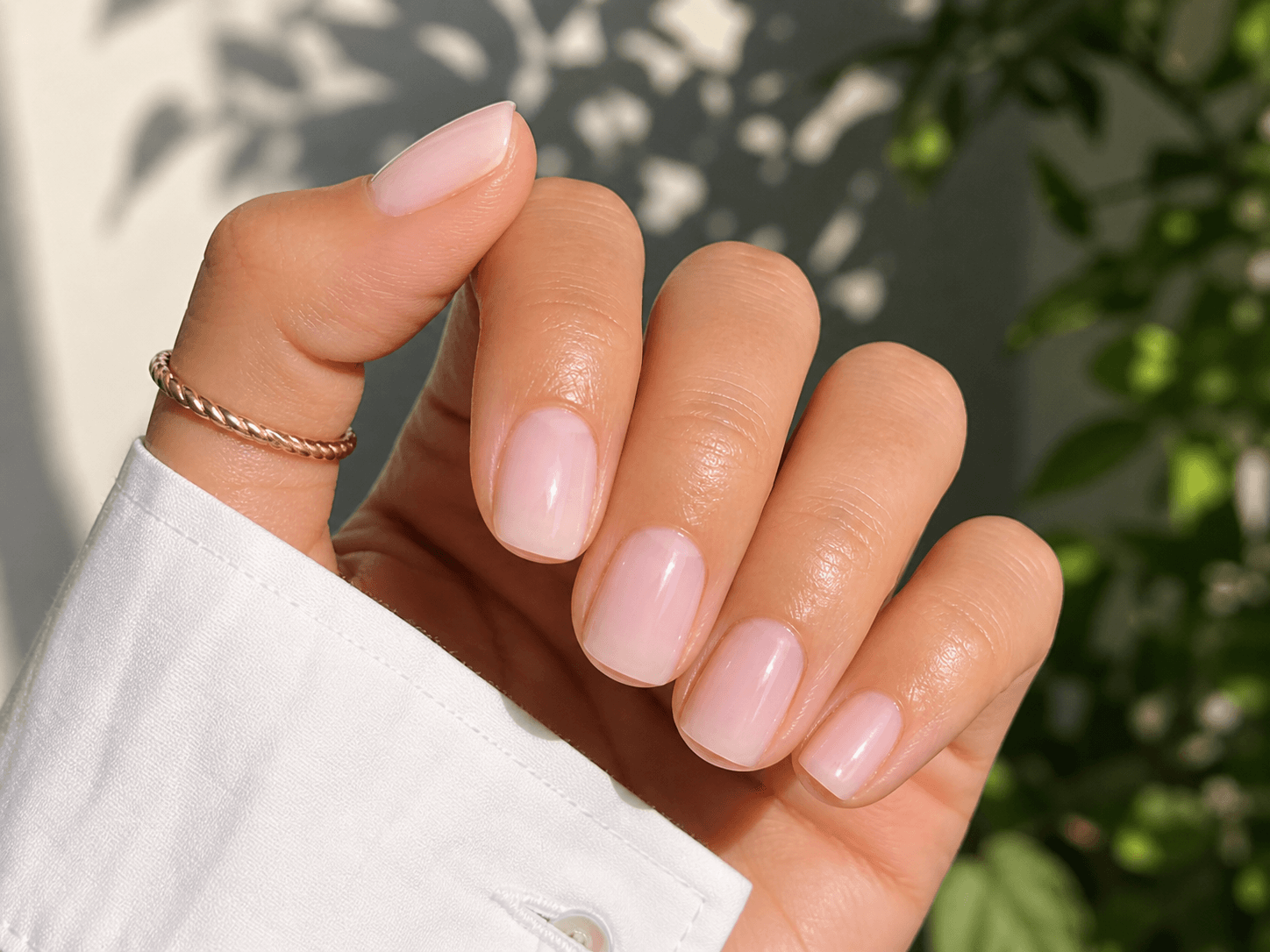
The finish is similar to gel polish. High shine, smooth, with a slightly plump quality that comes from the thicker formula. It comes in a range of shades, mostly nudes, pinks and neutrals, though the range has expanded considerably since the early versions which were largely limited to sheers and clears.
For anything beyond the core BIAB shade range, gel polish can be applied on top. The BIAB acts as the structural base and the gel polish provides the colour. This means colour choice is not limited by the product.
How application has evolved
The original BIAB format was an all-in-one product — primer, base coat, builder and colour combined in a single bottle, applied directly to the natural nail without anything underneath. That approach worked, but it meant the product was bonding directly to the nail plate with no buffer between them.
The way I apply BIAB is different to the original all-in-one method. A gel base coat goes on first, then a clear BIAB layer on top for structure, and then the client’s chosen gel colour over that. The base coat creates a separation layer between the BIAB and the nail plate. When it comes to removal, the acetone breaks down the layers from the top down, and the base coat means the BIAB is not pulling directly off the nail surface. The result is a removal process that is gentler on the nail plate than applying BIAB directly to bare nail.
It is not the most common approach in salons. But after seeing what repeated BIAB removal does to nails when there is nothing between the product and the nail plate, it is how I choose to work.
The removal caveat
Worth knowing before you commit
BIAB bonds to the nail plate more firmly than gel polish. Removal takes longer and requires more care. I have seen clients come in with noticeably thinner nails after repeated BIAB removal, particularly where the removal has not been done patiently or properly.
This is part of why I apply a gel base coat underneath the BIAB rather than directly onto the bare nail. The base coat sits between the product and the nail plate, which takes the edge off removal considerably. Gel colour on top means the BIAB layer itself stays clear and structural rather than doing double duty as a colour coat. Each layer has a specific job, and separation makes removal gentler at every stage.
It always matters if removal is rushed regardless of method. Soaking fully rather than filing aggressively, and not peeling under any circumstances, makes the difference between a product that supports nail health and one that quietly undermines it.
Is BIAB right for you?
The honest position is that BIAB suits most clients better than gel polish for everyday wear. The application method matters, the removal matters, and both are worth asking about before you book.
Worth trying if…
- Your gel nails chip or lift earlier than they should
- Your nails break before they reach any length
- You use your hands a lot or have prolonged water exposure
- You want to grow your nails out with some structural support
Gel polish is enough if…
- Your nails are already strong and healthy
- Your gel manicure reliably lasts two to three weeks
- You mainly want colour and a glossy finish
- You prefer a simpler, quicker removal process
Everyone responds differently, so the best approach is to give it a set or two and see how your nails feel after removal.
Related articles
Builder Gel Nails: Everything You Need to Know
What builder gel is, how it differs from BIAB and gel polish, what it’s used for and how removal works.
Read more
Why Does BIAB Burn? A Nail Technician Explains
What causes the heat spike during BIAB curing, what makes it worse and how your technician can reduce it.
Read more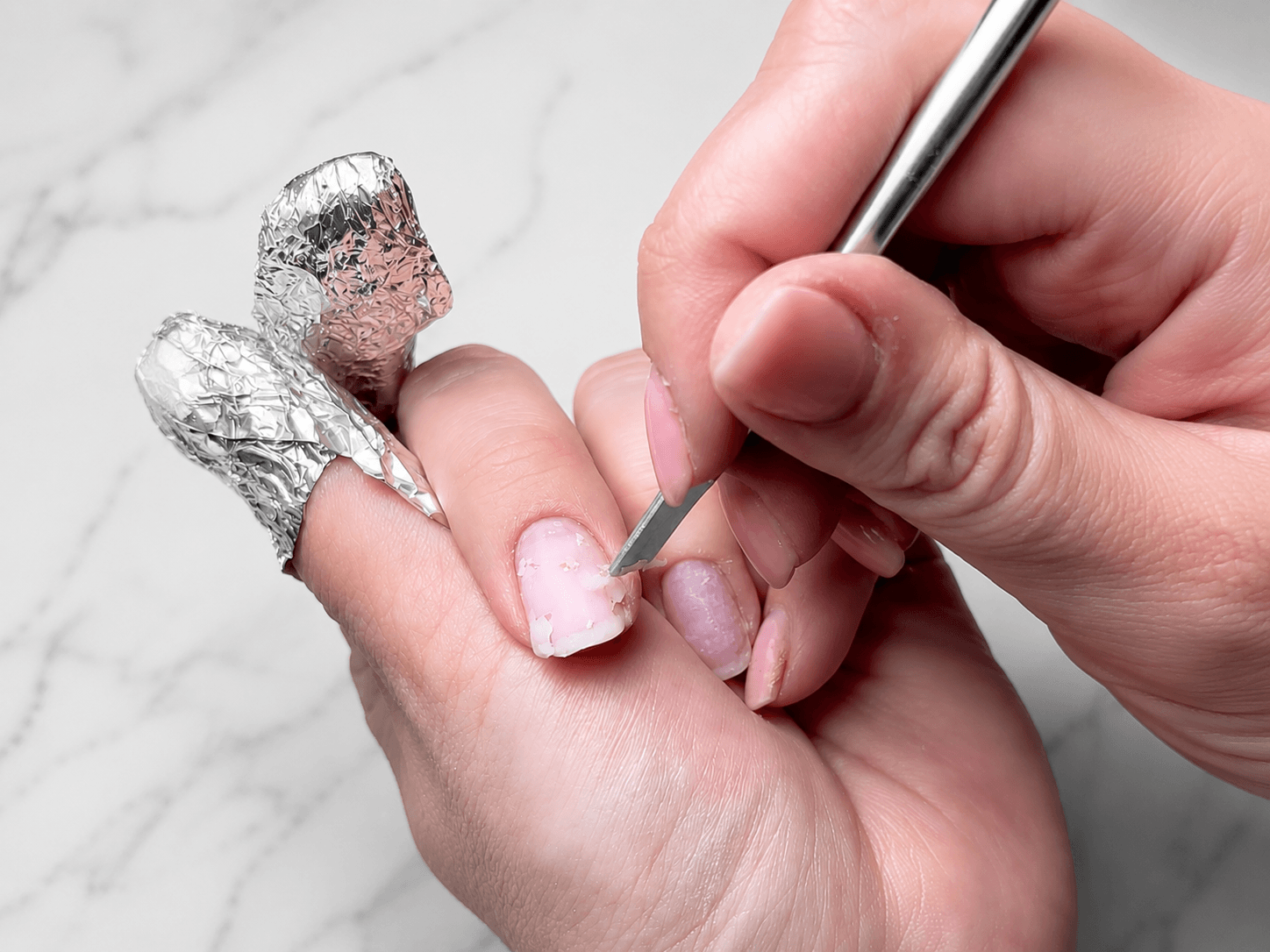
How to Remove BIAB at Home Without Damage
When full removal makes sense, what you need and how to work through it safely without thinning the nail plate.
Read more