How to Remove BIAB at Home Without Damage
A client messaged me last month asking how to take her BIAB off herself before a holiday. My first question back wasn’t about tools or technique. It was whether she actually needed a full removal at all, because most of the time the answer is no.
Before You Remove It, Consider an Infill Instead
BIAB is designed to be infilled, not stripped off and reapplied every few weeks. An infill fills the regrowth gap with fresh product over what’s already there, which means less acetone contact and less stress on the nail plate overall. Full removal is the right call every three to four appointments, not every single time.
If your BIAB is still in reasonable shape and you’re mainly dealing with regrowth at the cuticle, an infill at the salon will do less damage than soaking the whole set off at home. Save full removal for the times it’s genuinely needed.
When Full Removal at Home Makes Sense
There are good reasons to remove the whole set yourself. You might be switching to a different technician or product, taking a break from BIAB altogether, or simply don’t have salon access right now. In any of those cases, doing it carefully at home is entirely workable.
Worth knowing before you start
How easily your BIAB comes off depends on how it was applied. The original all-in-one BIAB format bonds directly onto the bare nail, which means the acetone has to break that bond completely, and it takes longer and more patience to avoid damaging the nail underneath. If your BIAB was applied over a separate gel base coat, with the BIAB layer and colour built on top of that, removal tends to be gentler. The acetone works through the layers from the top down rather than pulling directly off the nail surface. If you’re not sure which method your technician used, the what is BIAB nails guide explains the difference and why it matters.
What You Need
- 100% pure acetone. Standard nail polish remover will not break down BIAB effectively.
- Cotton wool balls or pads. Cut or torn into pieces roughly the size of each nail.
- Aluminium foil cut into fingertip squares.
- A coarse nail file, 80 to 100 grit. Used to file away as much of the BIAB layer as safely possible before soaking.
- A cuticle pusher or orange stick. For gently working softened product off the nail.
- A fine buffer. To smooth the nail surface once the bulk of the product is off.
- Petroleum jelly. To protect the surrounding skin during the longer acetone soak.
- Cuticle oil. Applied immediately after removal to restore moisture to the nail plate.
How to Remove BIAB at Home
Step 1
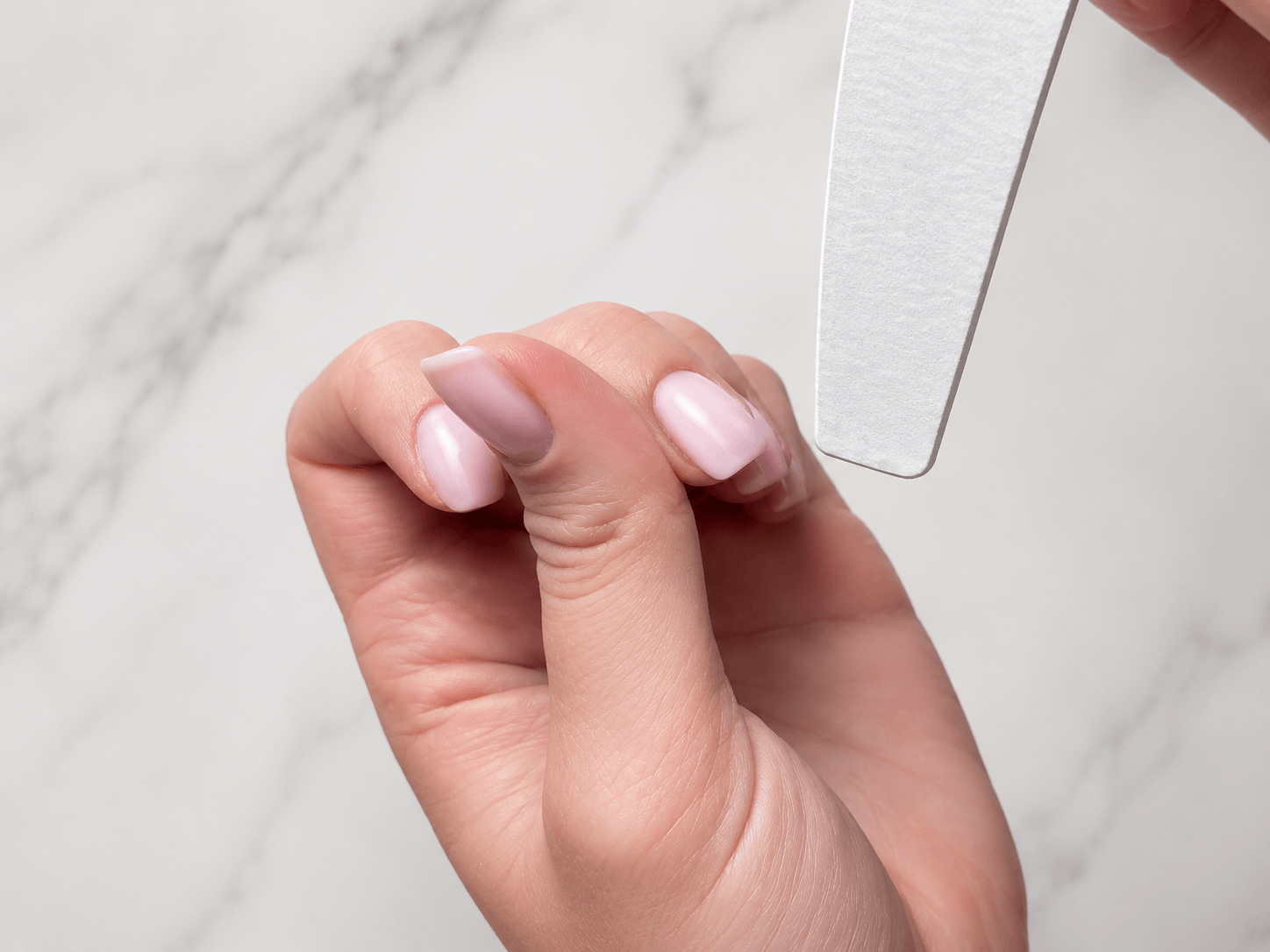
File the top layer
File the surface of each nail with your coarse file, removing as much of the BIAB as you safely can without reaching the natural nail plate underneath. This is different to filing standard gel polish, where you only need to break the shine. With BIAB, the more product you can file away at this stage, the better the acetone will penetrate what’s left. Go steadily and check your progress often rather than filing in one continuous pass.
Step 2
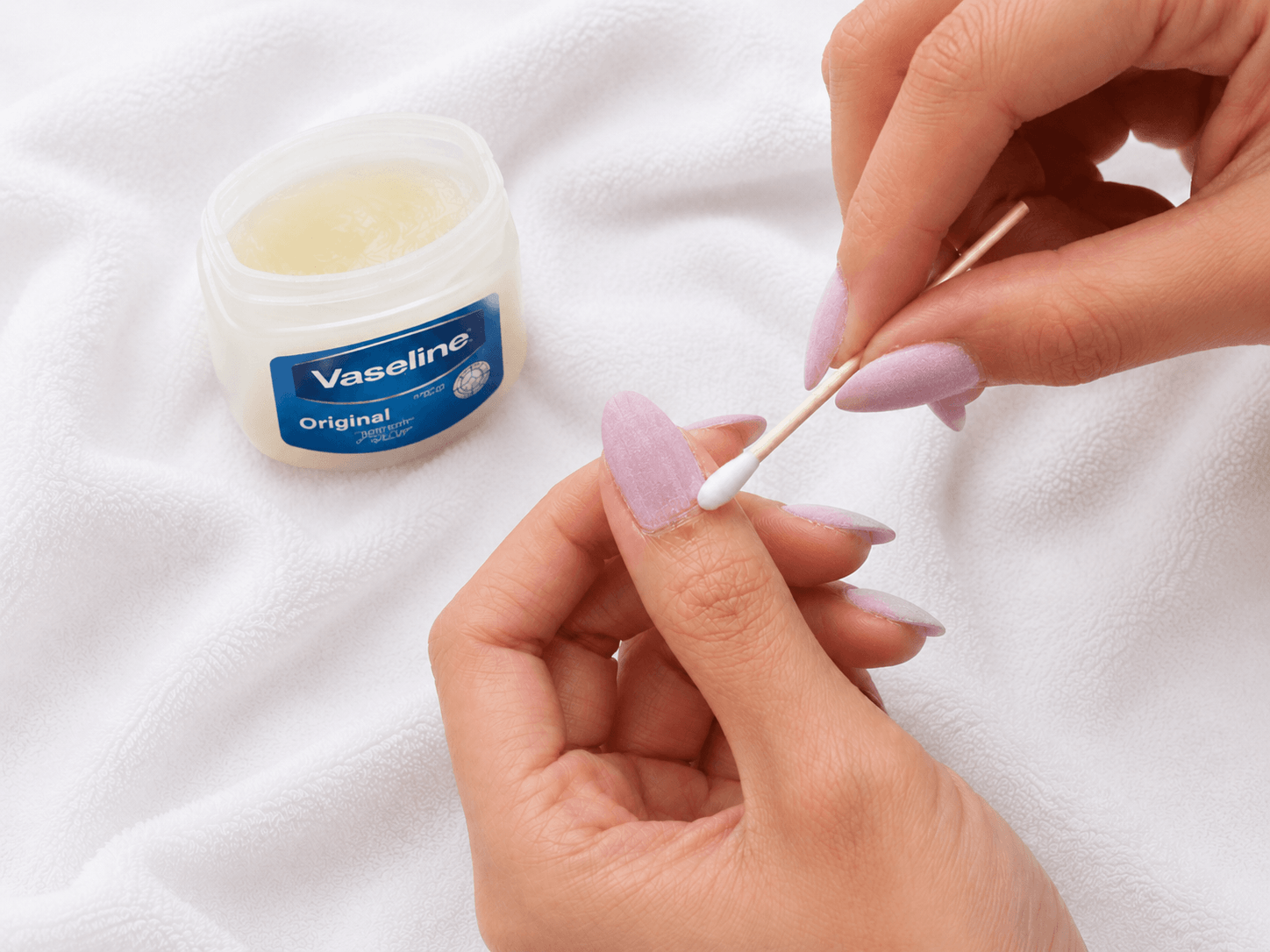
Protect the surrounding skin
Apply petroleum jelly to the skin around each nail and to your cuticles. BIAB removal takes longer than gel polish, so the skin around the nail is exposed to acetone for longer too.
Step 3
Soak and wrap
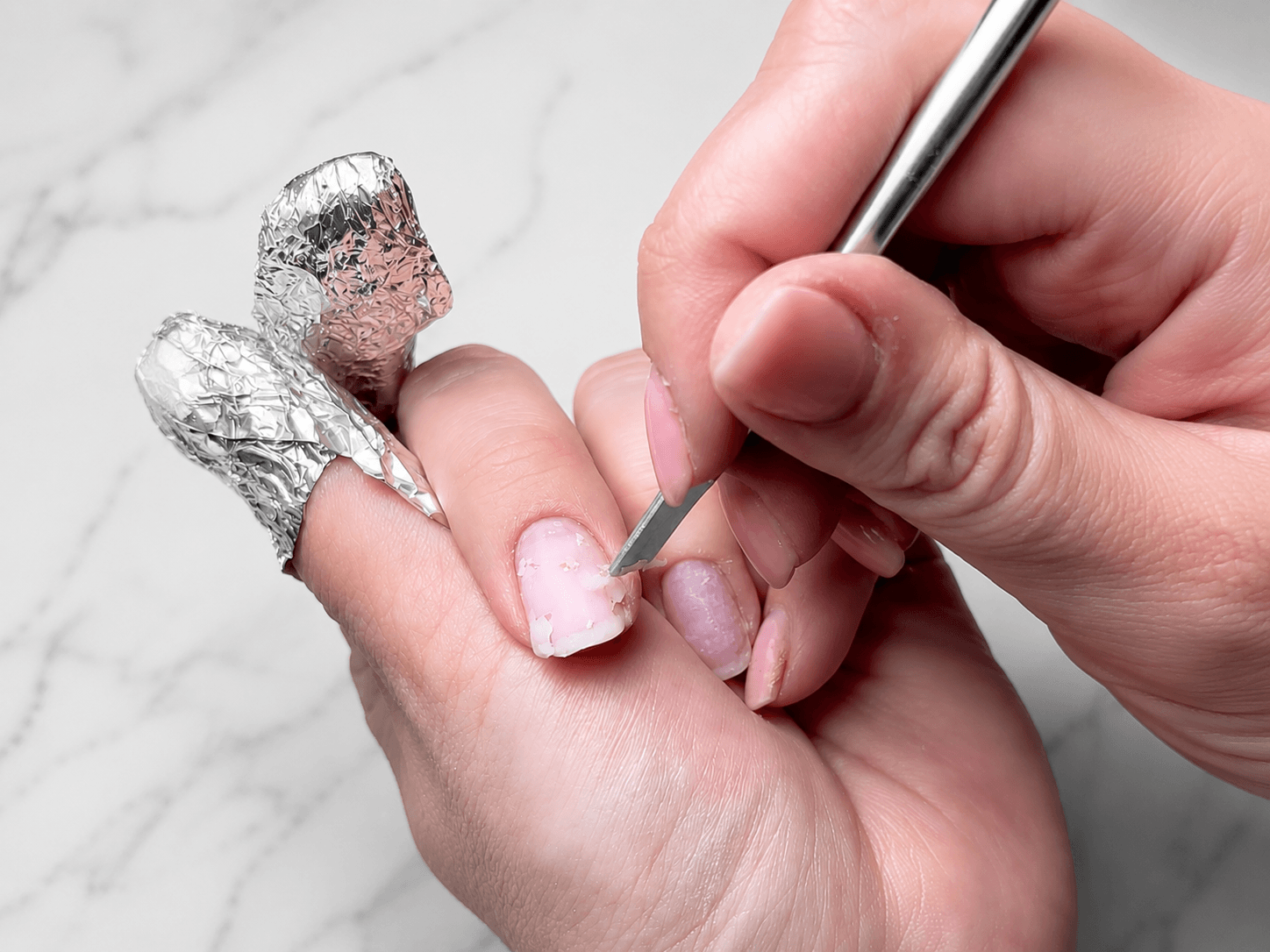
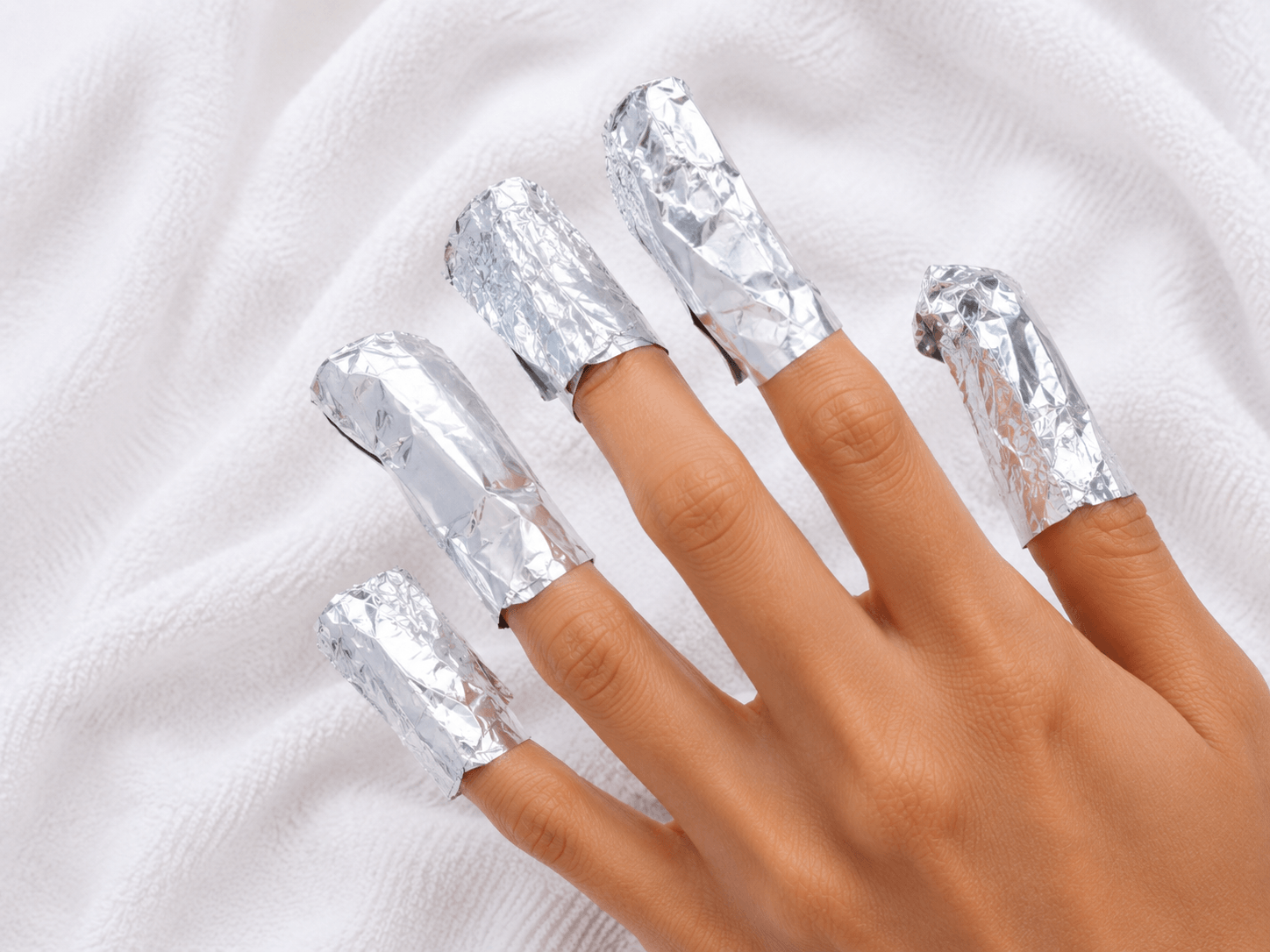
Saturate a cotton ball in acetone, place it on the nail and wrap the fingertip tightly in foil. Repeat for all ten fingers and wait twenty to thirty minutes. BIAB is thicker than gel polish, so it needs more time than a standard gel manicure.
Step 4
Check and remove
Take off one wrap and check the nail. The BIAB should look soft and slightly lifted at the edges. Use a cuticle pusher to gently push the product toward the tip. Work in sections rather than trying to clear the whole nail at once.
If the product still feels firm or resistant, don’t push harder. Re-wrap and soak for another five to ten minutes. Nails that were applied with a thicker layer or have had several infills on top of each other often need a second full soak before they clear properly.
Step 5
Buff and finish
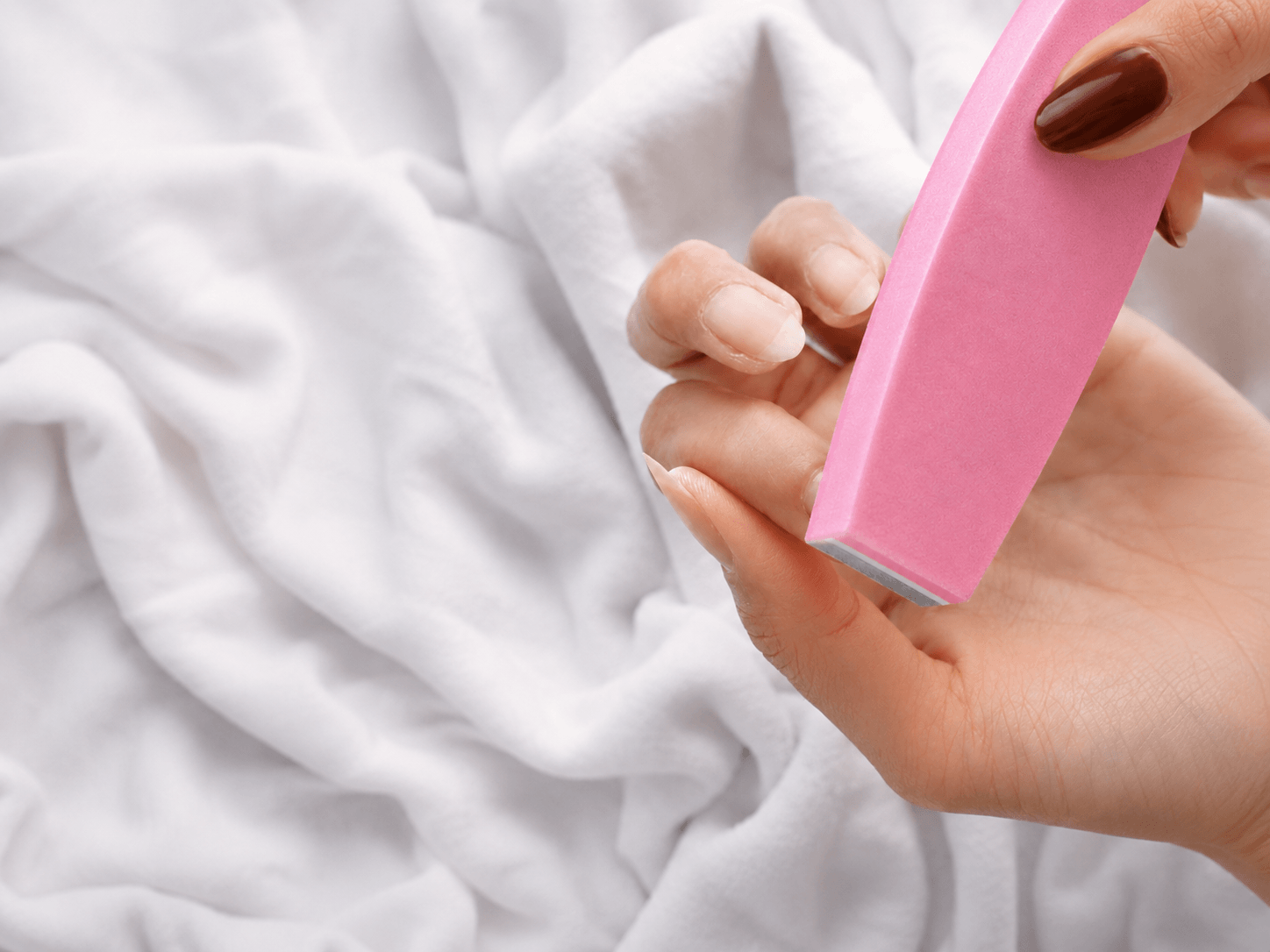
Once the bulk of the product is off, buff the nail surface lightly with a fine buffer to smooth out any remaining residue. Don’t press hard. Let the buffer do the work rather than forcing it. Rinse your hands under warm water afterwards to clear away any leftover dust before moving on to the next step.
Step 6
Hydrate
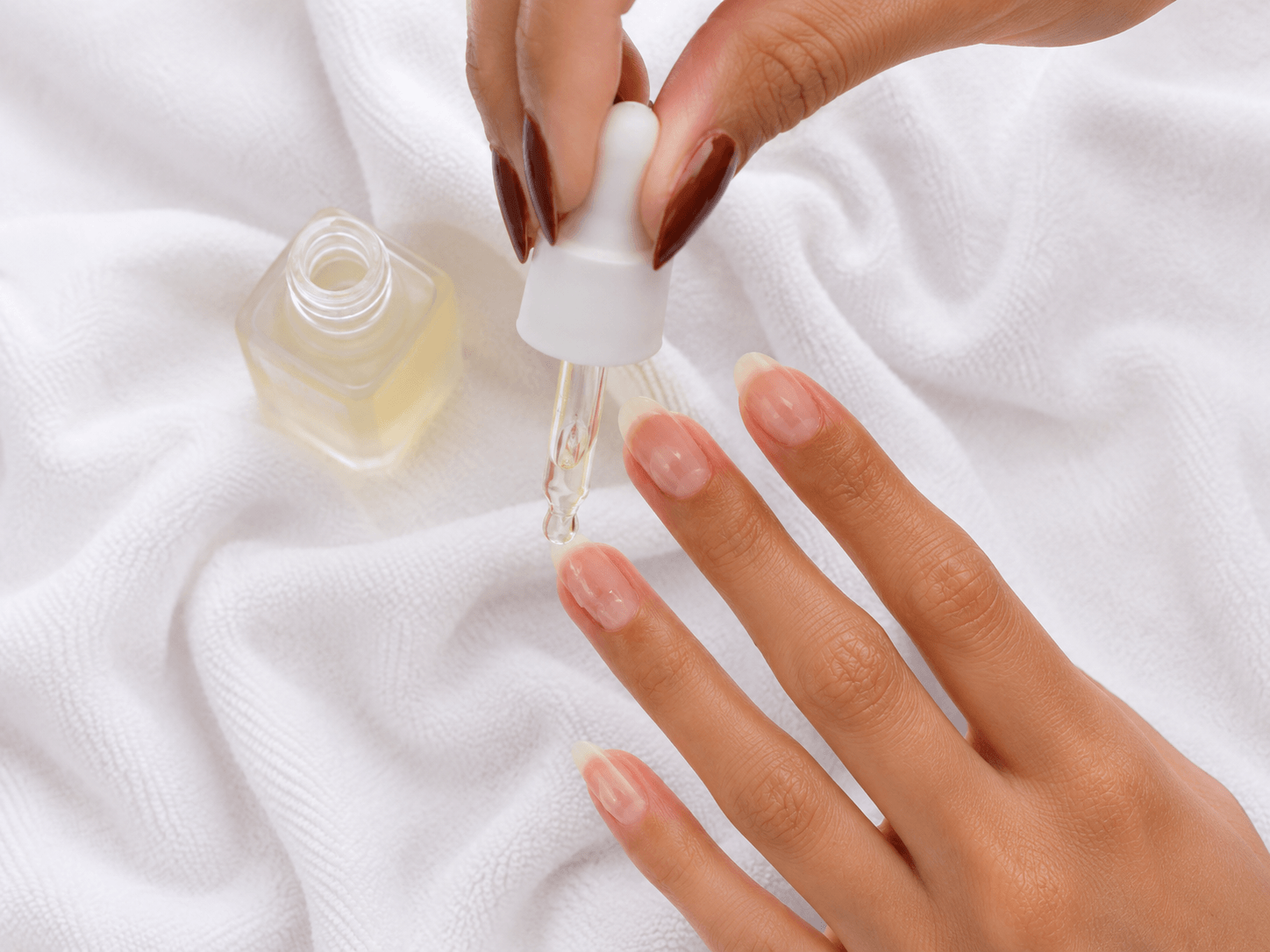
Apply cuticle oil to every nail straight away. Acetone strips moisture from the nail plate and the surrounding skin, and oil is the fastest way to start putting it back.
What Not to Do
- Don’t peel or pick at lifted edges. BIAB bonds firmly to the nail plate, and peeling takes layers of natural nail with it. The damage from this shows up as thinning and roughness that takes months to grow out.
- Don’t rush the soak by pressing or scraping at product that hasn’t softened. If it’s not coming away easily, it needs more time in acetone, not more pressure from the tool.
- Don’t skip the petroleum jelly step. BIAB removal runs long enough that unprotected skin around the nail will end up noticeably dry and irritated by the end of it.
After Removal
Your nails will likely look matte and feel slightly dry immediately afterwards. This is normal and temporary. Daily cuticle oil from this point will restore moisture within a few days.
Keep nails short for a week or two after a full removal, particularly if this was a longer-term set. The nail plate is more vulnerable to breaking at length straight after coming off a structural product like BIAB.
If you’re planning to go back into BIAB, give your natural nails a short break first where possible.
Related articles
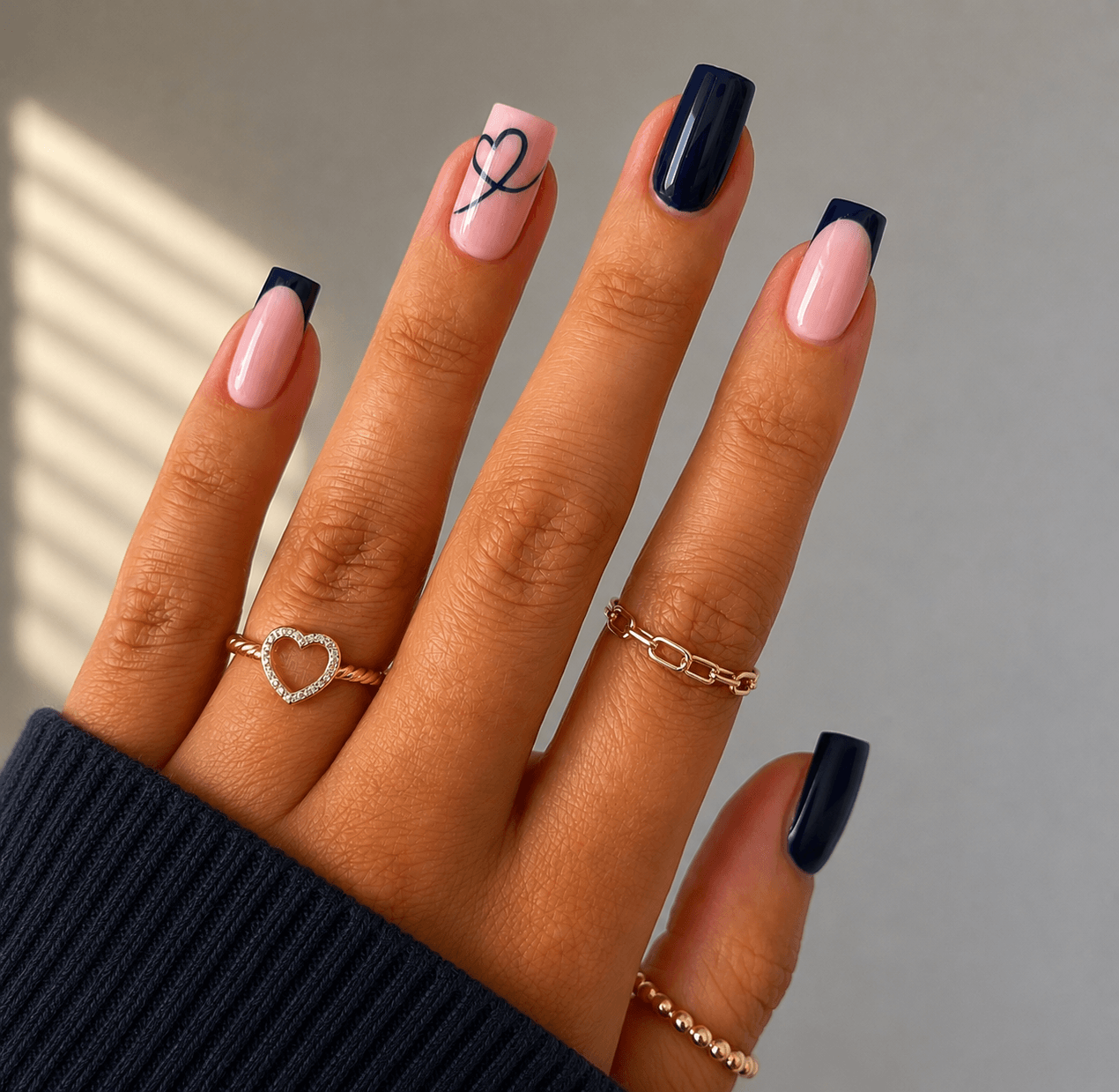
What Is BIAB? Builder in a Bottle Explained
What BIAB actually is, how it differs from gel polish, who it suits and what to know about removal before you commit.
Read more
Why Does BIAB Burn? A Nail Technician Explains
What causes the heat spike during BIAB curing, what makes it worse and how your technician can reduce it.
Read more
Builder Gel Nails: Everything You Need to Know
What builder gel is, how it differs from BIAB and gel polish, what it’s used for and how removal works.
Read more