Why Does BIAB Burn? A Nail Technician Explains
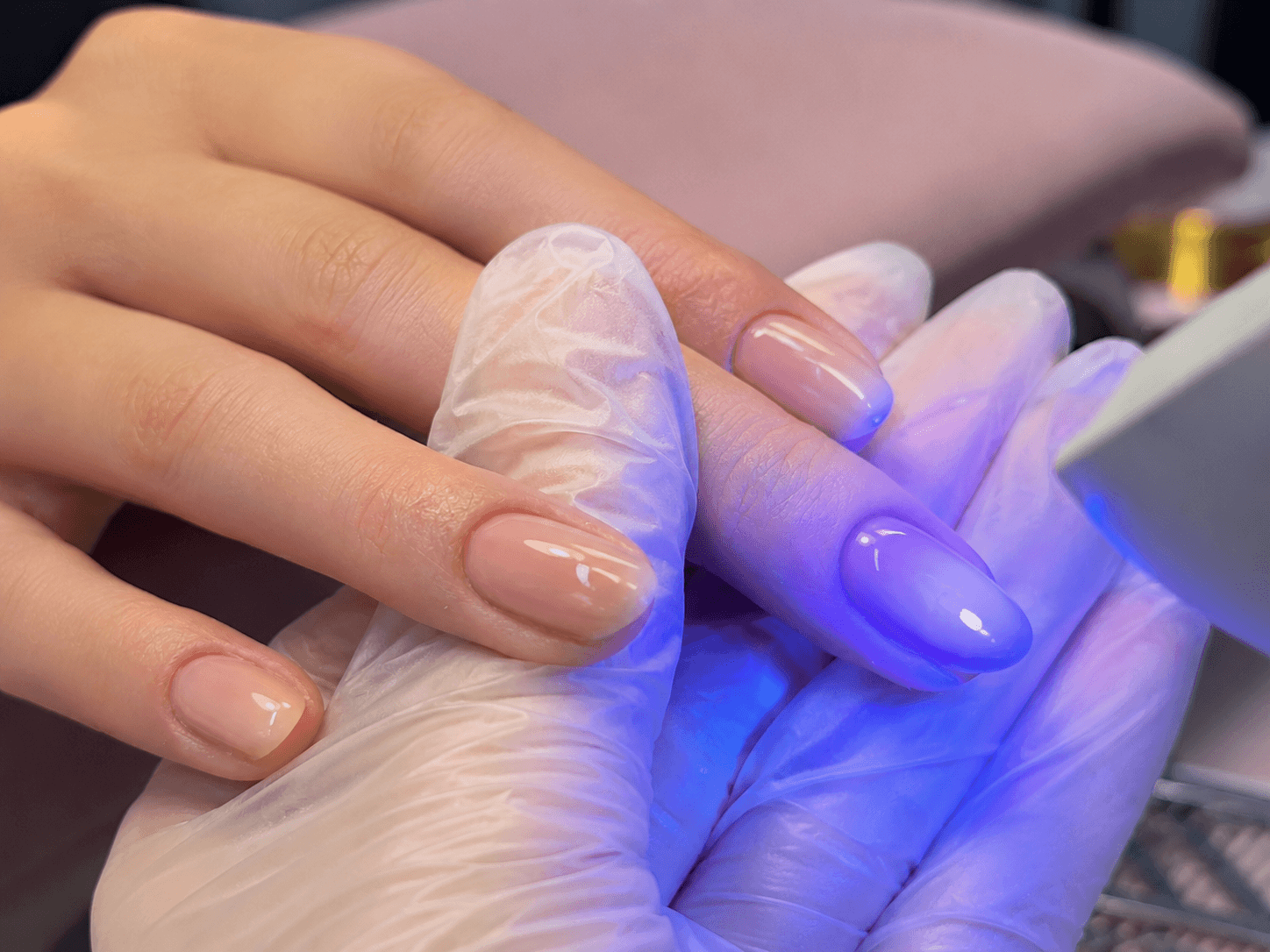
You put your hand under the lamp and a few seconds in, your nail bed feels like it’s burning. You pull your hand out, wait a moment, then try again. If this has happened to you during a BIAB appointment, you’ve experienced what’s called a heat spike, and it’s one of the most common complaints I hear from clients who’ve had builder gel for the first time.
What’s Actually Happening
When gel products cure under a UV or LED lamp, a chemical reaction called polymerisation takes place. The photoinitiators in the gel react to the light and begin bonding molecules together to form the hardened product. That bonding process releases heat. This is an exothermic reaction, meaning heat is a byproduct of the chemistry rather than something going wrong.
Every gel product creates some heat when it cures. Most of the time you don’t feel it because the amount of product is too thin and the heat dissipates quickly. With BIAB, the product is thicker, and more molecules reacting at once means more heat released in a shorter period. That’s the burning sensation.
If you’re not familiar with the product yet, the what is BIAB nails guide covers the full picture.
Why BIAB Burns More Than Gel Polish
Gel polish is applied in thin coats, typically a fraction of a millimetre. The small volume of product means the exothermic reaction produces only a small amount of heat, which the surrounding skin absorbs and disperses before it registers as discomfort.
BIAB requires a thicker application by design. That thickness is what gives it its structural strength and why it lasts longer than standard gel polish. But more product curing at once means a stronger reaction and more heat concentrated in a smaller area. The nail bed sits directly underneath, with no buffer. Clients with thin nail plates feel this more acutely because there’s less natural barrier between the reacting product and the nail bed.
What Makes It Worse
Three things consistently increase heat spike intensity.
- Thick application. A layer of BIAB applied too generously will release more heat than a correctly sized bead. If the burning is consistently intense, the product is almost certainly going on too thick.
- High wattage lamps. These cure faster, which means the same chemical reaction happens in a shorter window. More heat released in less time equals a more intense sensation. A lower lamp setting or a gradual cure mode releases the same amount of heat more slowly and significantly reduces the spike.
- Thin or compromised nail plates. Clients who already have thin nails from previous damage or repeated removal cycles are more sensitive to heat spike. It doesn’t mean they can’t have BIAB, but it does mean the application and curing approach needs to account for it.
When It’s More Than a Heat Spike
A brief, sharp heat sensation in the first few seconds of curing is normal with BIAB. It should pass within moments of the reaction completing. That’s heat spike, and while uncomfortable, it isn’t damaging if it’s mild and brief.
When to tell your technician straight away
Burning that’s intense enough to make you pull your hand out of the lamp, pain that lingers after the cure is complete, or sensitivity that gets worse rather than better across an appointment. These can indicate the product is going on too thick, the lamp setting is too high, or in some cases a reaction to the product itself. If the burning is unbearable or doesn’t settle quickly, say something rather than pushing through it.
How to Reduce It
The most effective fix is thinner layers. Rather than one generous application of BIAB, two thinner layers cured separately produce a gentler reaction each time with the same end result structurally.
A lower lamp setting or gradual cure mode reduces the speed of the reaction and spreads the heat release over a longer period. The same amount of heat is generated overall, but the slower release makes it far more manageable.
A technique I use in the salon
After applying BIAB to each nail, I pass a single-finger lamp briefly over the surface before the client puts their hand under the main lamp. This partially sets the product first, so when the full cure happens, the exothermic reaction is less intense and the heat spike is significantly reduced. It takes a few extra seconds per nail and clients with thin or sensitive nail plates notice the difference immediately.
If you have thin nails and consistently experience intense heat spike, mention it before your appointment starts. It’s useful information that changes how the application should be approached, and a technician who knows in advance can adjust layer thickness and curing method accordingly.
Related articles
What Is BIAB? Builder in a Bottle Explained
What BIAB actually is, how it differs from gel polish, who it suits and what to know about removal before you commit.
Read more
How Long Does BIAB Last?
Infill intervals versus how long you can keep the same set, what affects wear time, and why four weeks is the outer limit.
Read more
BIAB Infill: The Complete Guide
What happens at an infill, how often you need one, and why the timing matters more than you’d think.
Read more
Builder Gel Nails: Everything You Need to Know
What builder gel is, how it differs from BIAB and gel polish, what it’s used for and how removal works.
Read more
How to Remove BIAB at Home Without Damage
When full removal makes sense, what you need and how to work through it safely without thinning the nail plate.
Read more