
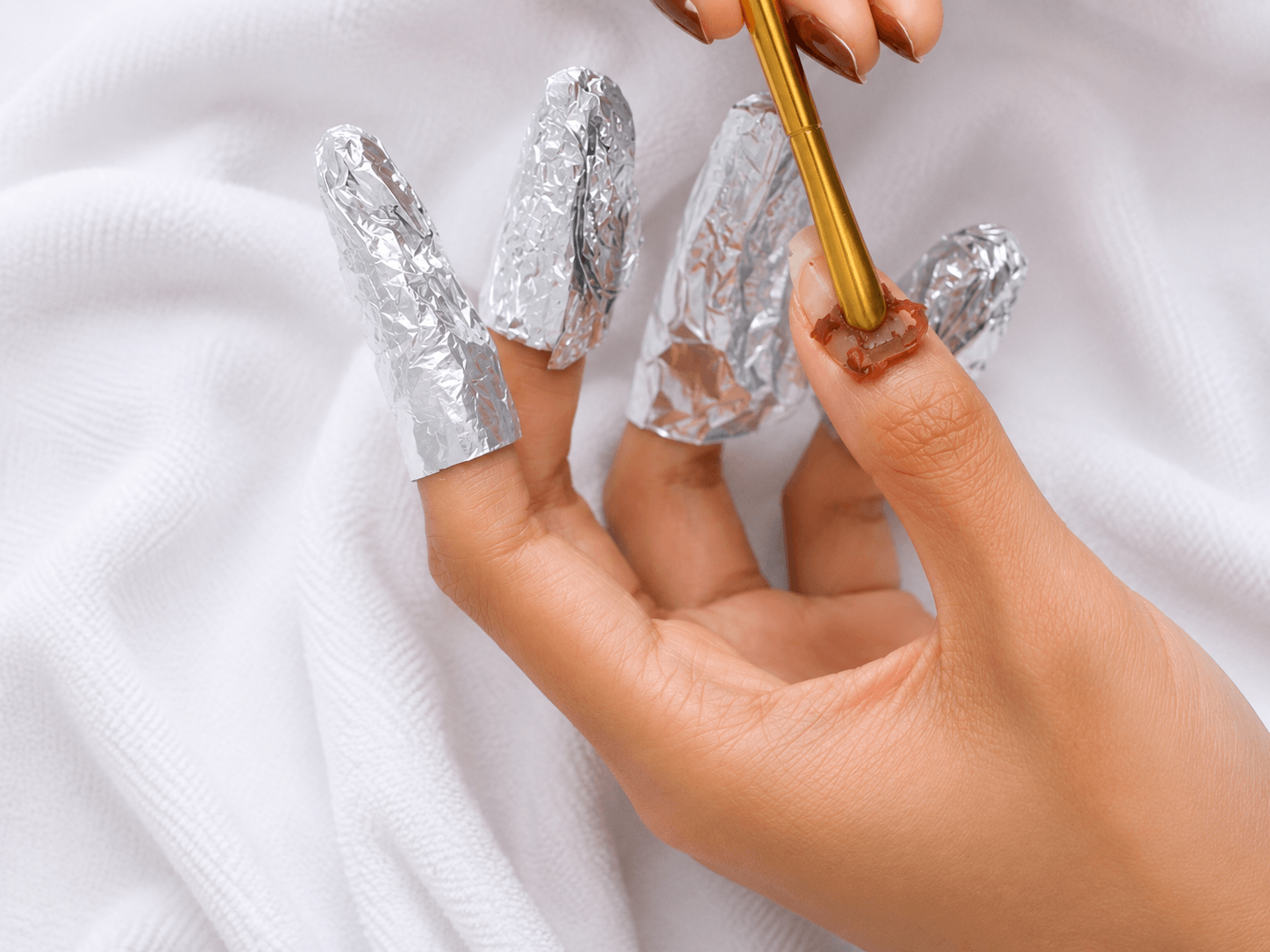
How to Remove Gel Nails at Home Without Damage
Every week I see clients come in with nails that have been peeled, picked or filed down to nothing at home. The damage is always the same — thin, white-patched nail plates that take months to recover. The removal itself isn’t complicated, but there are a few things that make the difference between doing it safely and undoing months of nail health.
Before You Start
The most important thing is knowing what you actually have on your nails. The easiest way to tell is the thickness and feel. If the colour on your nail is thin and slightly flexible, it’s almost certainly gel polish. If it feels rigid and thick, it’s more likely acrylic or builder gel. I mention this because I see clients confused about it regularly, and the removal process is different for each.
This guide covers gel polish only. If you suspect you have acrylic or builder gel, doing this incorrectly carries a higher risk of damage. The how to remove acrylic nails guide covers that process separately.
When to go to a salon instead
If the gel is severely lifted, significantly grown out, or any nail looks discoloured underneath, go to a salon. Home removal works well for a manicure that’s simply ready to come off.
What You Need
- 100% pure acetone. Standard nail polish remover is not the same thing and will not dissolve gel effectively.
- Cotton wool balls or pads. Cut or torn into pieces roughly the size of each nail.
- Plastic food wrap or aluminium foil cut into fingertip squares.
- A coarse nail file. 180 grit is right for this step.
- A cuticle pusher or orange stick. For gently sliding the softened product off the nail.
- Petroleum jelly. To protect the surrounding skin from acetone.
- Cuticle oil. Applied immediately after removal to restore moisture to the nail plate.
Plastic wrap versus foil
Plastic food wrap creates a tighter seal than foil and is less likely to let acetone drip during the soak. Either works, but plastic wrap is the more effective option if you have it.
How to Remove Gel Nails at Home
Step 1
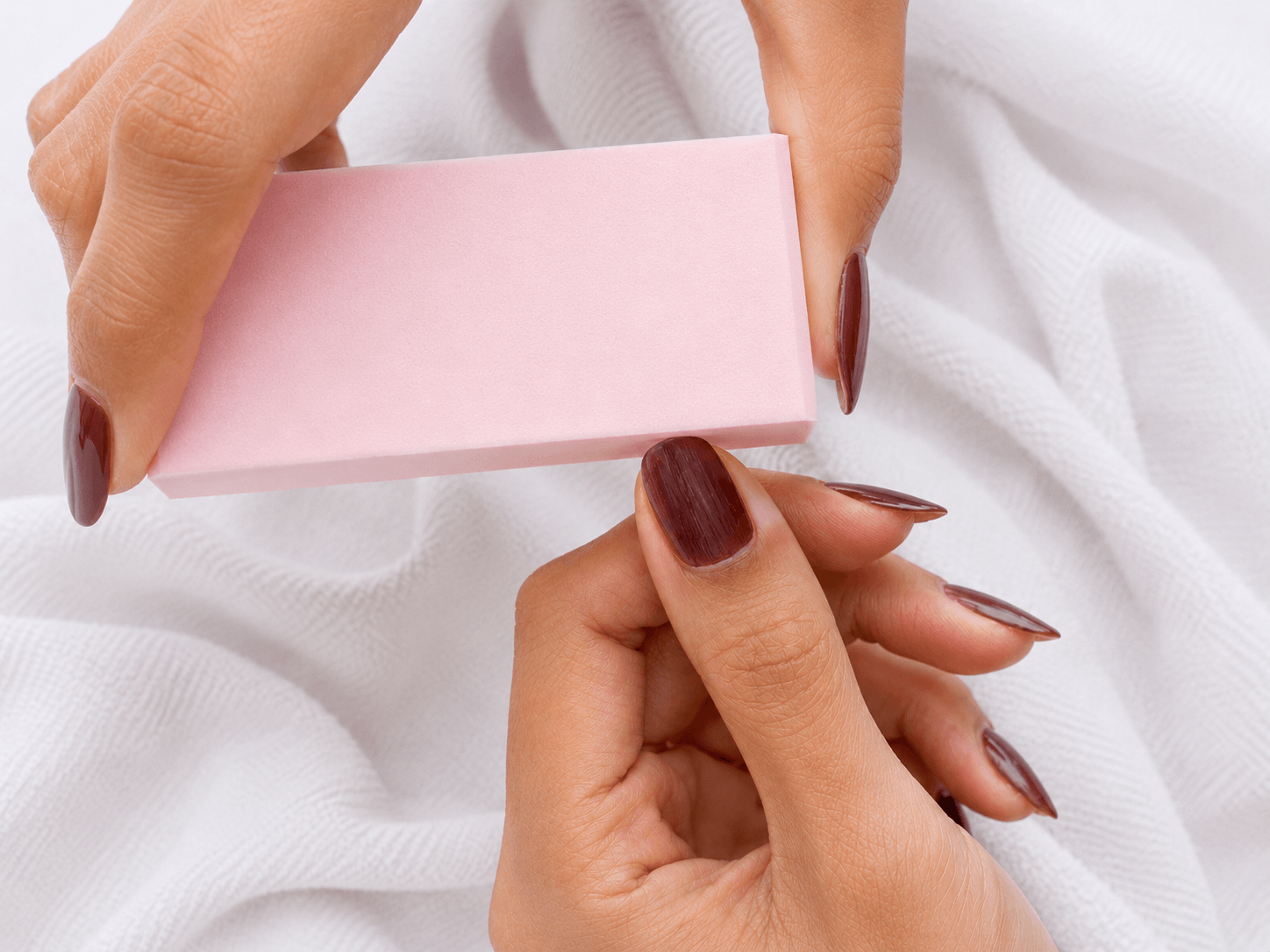
File the surface seal
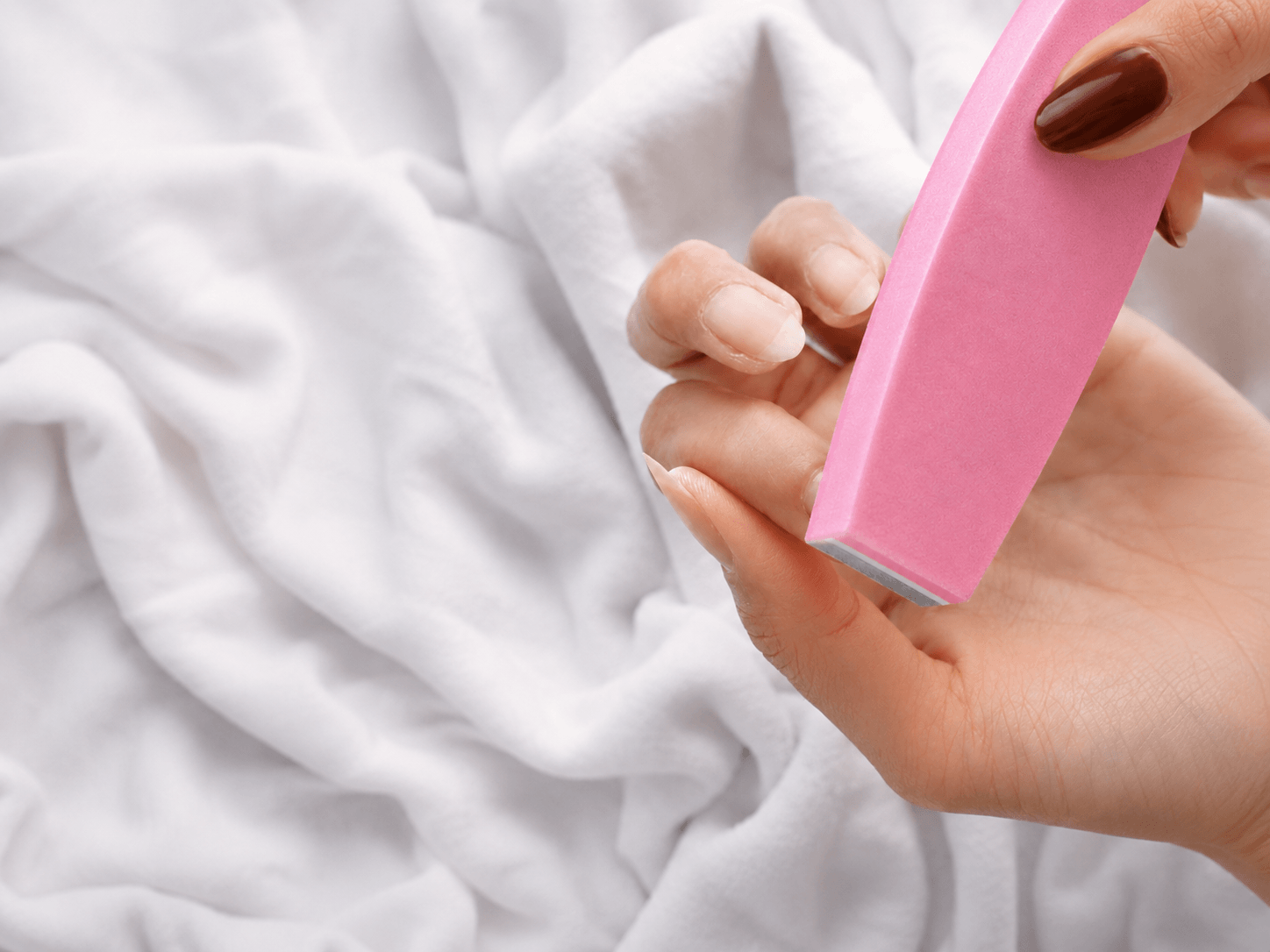
File the top surface of each nail until the shine is completely gone. You are not trying to file the colour off. You are breaking the top coat seal so the acetone can reach the gel underneath. A 180 grit file is right for this. Light pressure, even strokes. Stop when the finish turns dull.
Step 2
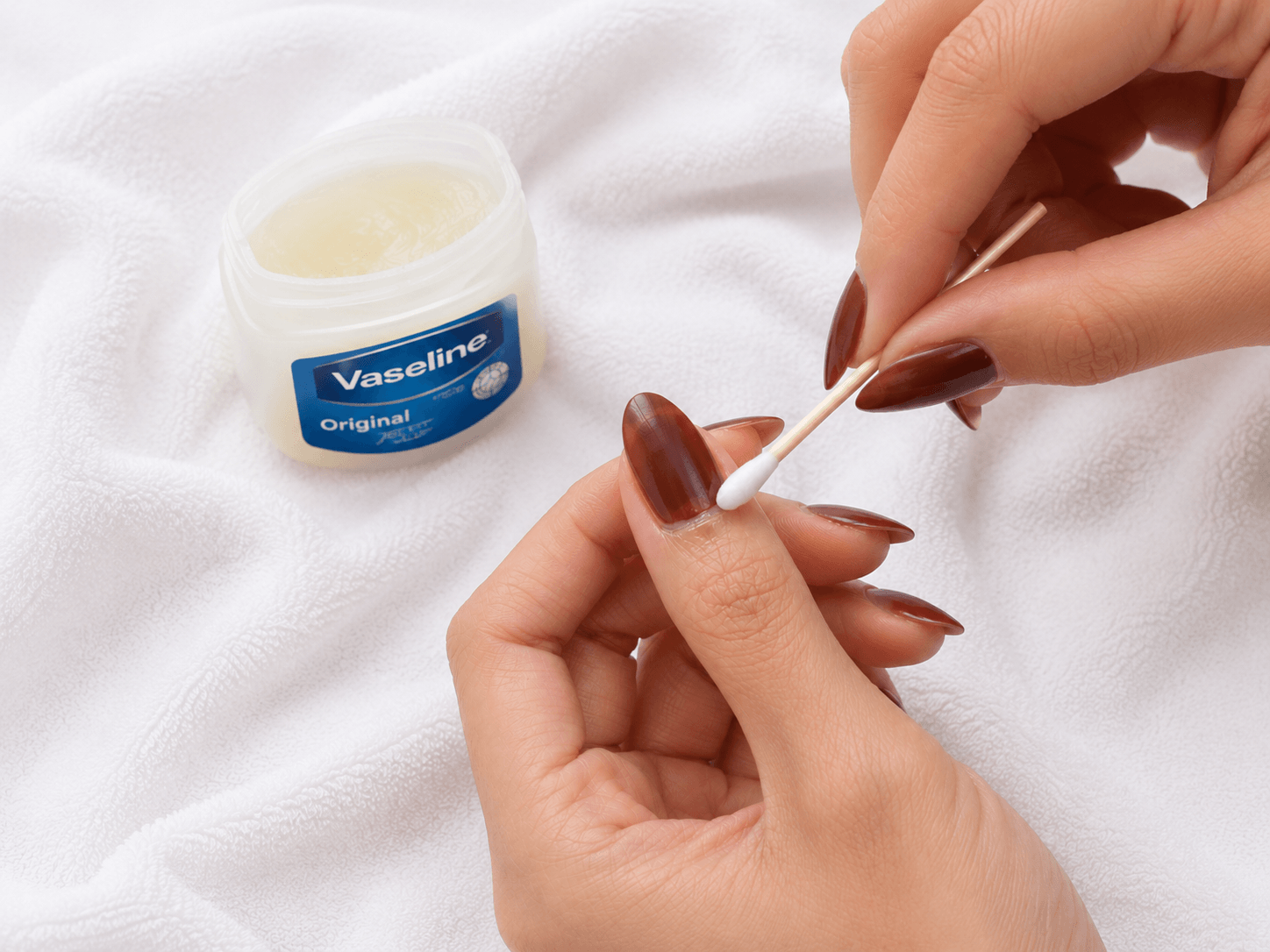
Protect the surrounding skin
Apply a thin layer of petroleum jelly to the skin around each nail and to your cuticles. Acetone dehydrates skin on contact and a long soak will dry out the surrounding area without this barrier.
Step 3
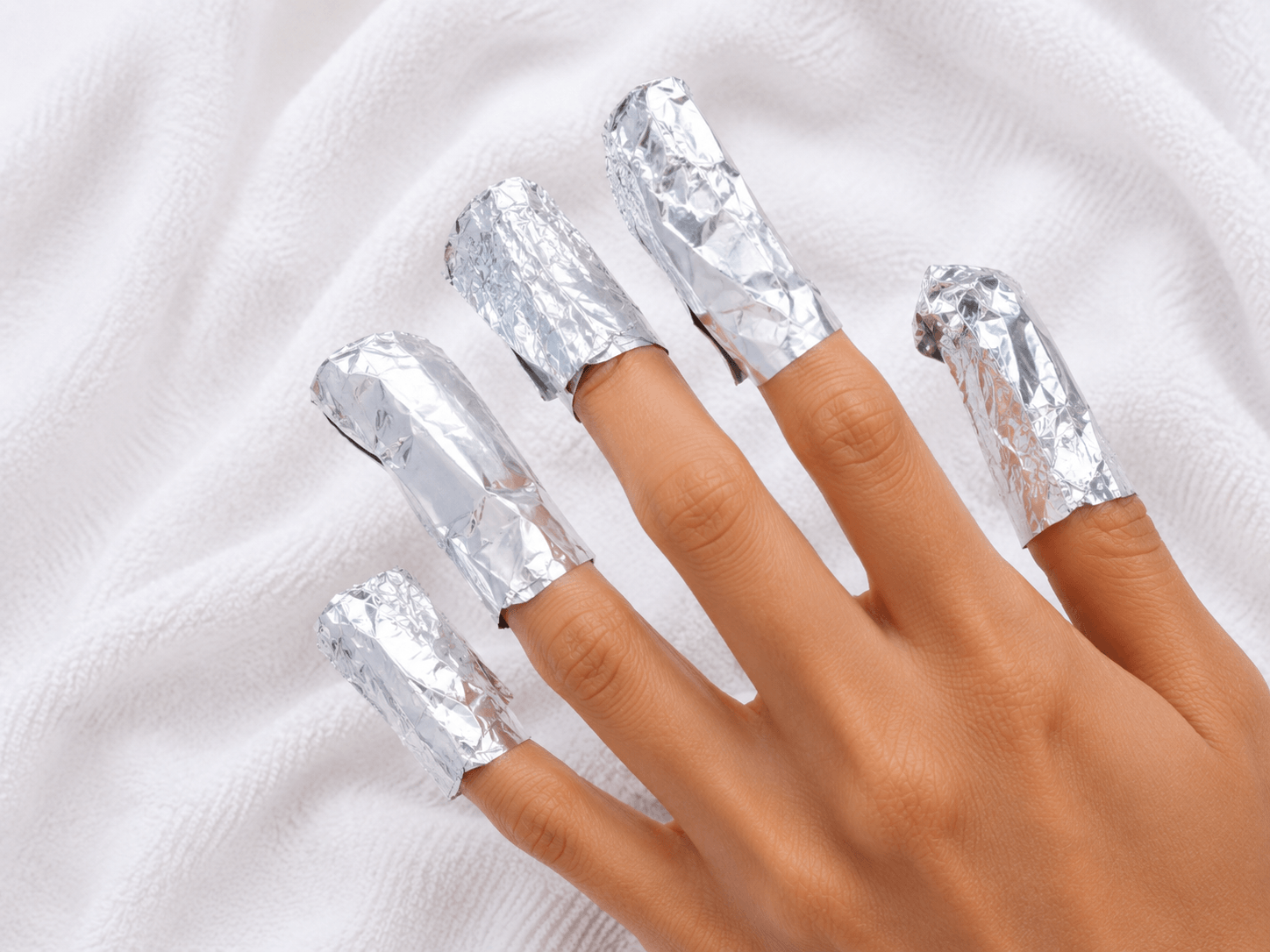
Soak and wrap
Cut or tear cotton wool into pieces roughly the size of each nail. Saturate each piece in acetone and place it directly on the nail. Wrap the fingertip in plastic food wrap or foil, pressing it close enough to hold the cotton in place without squeezing acetone out. Repeat for all ten fingers and wait ten to fifteen minutes.
Step 4
Check and remove
Take off one wrap and check the nail. The gel should look soft, slightly bubbly or lifted at the edges. Use a cuticle pusher to gently slide the product toward the tip. If it moves easily, continue across the nail. If it resists, re-wrap and wait another five minutes.
Do not force it. Gel that isn’t moving needs more time, not more pressure. Any scraping hard enough to feel resistance is scraping the nail plate, not the gel.
Step 5
Remove remaining product
Once the bulk of the gel is off, buff the nail surface lightly to remove any remaining residue. Then run a washcloth under warm water and wipe the nail clean. This order works better because buffing on a dry nail gives you more control before the warm water softens the surrounding skin.
Step 6
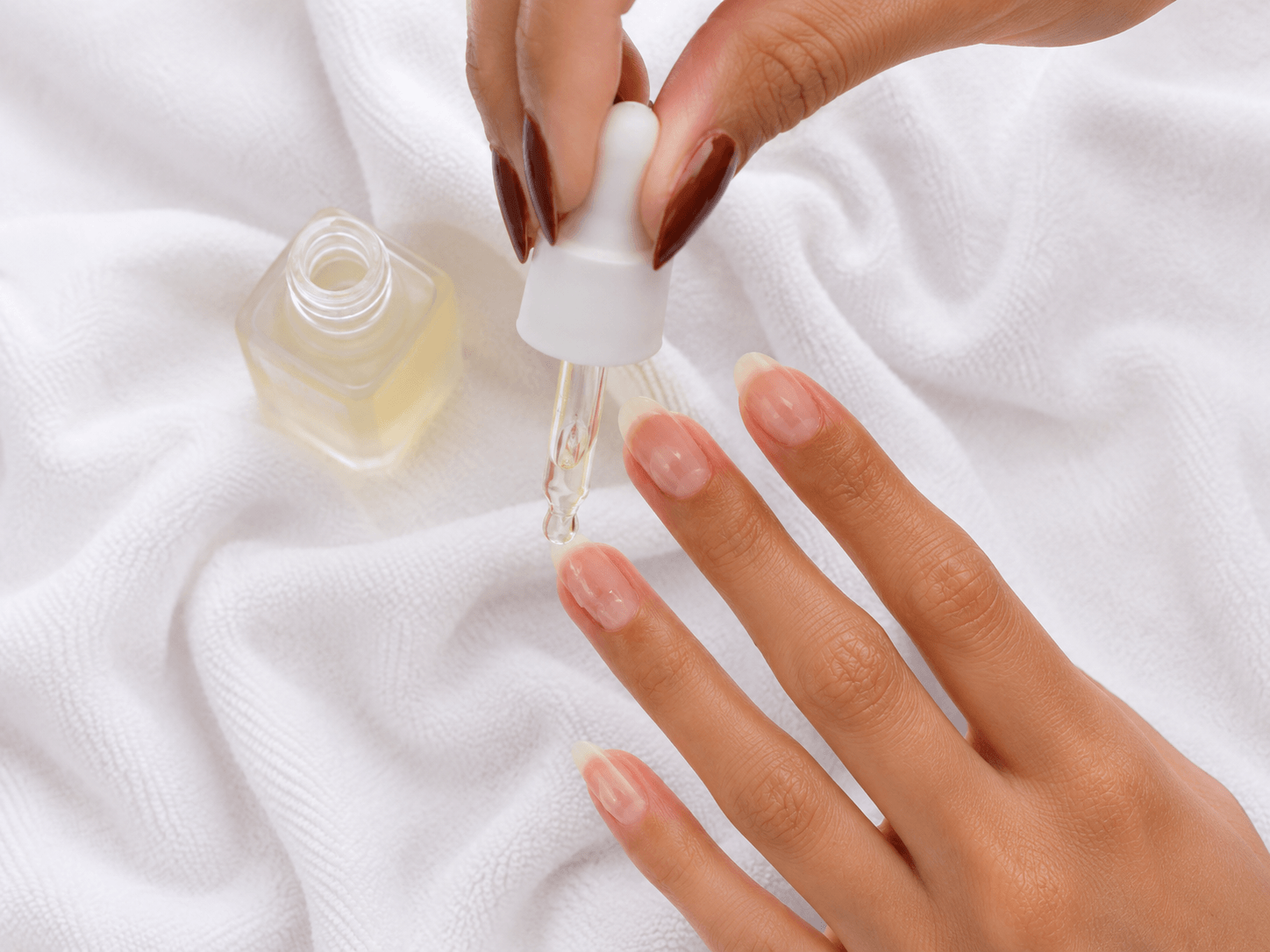
Apply cuticle oil
Immediately and to every nail. Acetone removes surface moisture from the nail plate. Cuticle oil begins restoring it. Don’t skip this step.
What Not to Do
- Do not peel. Peeling is the most common mistake and the most damaging. Gel bonds to the nail plate, and when you peel it off you take layers of natural nail with it. The white patches that appear afterwards are areas of nail plate that have been stripped. They don’t repair quickly.
- Do not use regular nail polish remover in place of acetone. It will not work effectively on cured gel and a longer soak in a weaker product does more damage to the surrounding skin without actually removing the gel.
- Do not file aggressively through the colour. The filing step is for the top coat seal only. If you can see the colour fading, you have gone far enough. Filing past that point removes the product by force rather than chemistry and takes nail plate with it.
Does This Work for BIAB and Builder Gel?
No, and this is where it’s worth being clear. Builder gel and BIAB are significantly thicker than gel polish and the removal process is more involved. Applying this method to builder gel and expecting the same result will either leave product on the nail or lead to forcing it off, both of which cause damage.
If you have builder gel or BIAB on your nails, the what is BIAB nails guide covers removal in the right level of detail.
After Removal
Nails will feel dry and may look slightly dull immediately after. This is normal. The acetone has temporarily dehydrated the nail plate and cuticle oil applied daily from this point will restore moisture and flexibility over the following days.
Keep nails short for at least a week after removal. A dehydrated nail plate is more likely to break at length, and a break on an already compromised nail sets recovery back considerably.
Avoid further acetone exposure for at least two weeks. If you want colour on your nails in the meantime, use a strengthening base coat underneath a regular nail polish rather than going straight back to gel.
Related articles
How Long Do Gel Nails Last?
Why some sets last two weeks and others last four and what preparation, aftercare and product choice actually determine.
Read more
How to Stop Gel Nails from Peeling
The preparation, application and aftercare causes of early lifting and what to do about each one.
Read more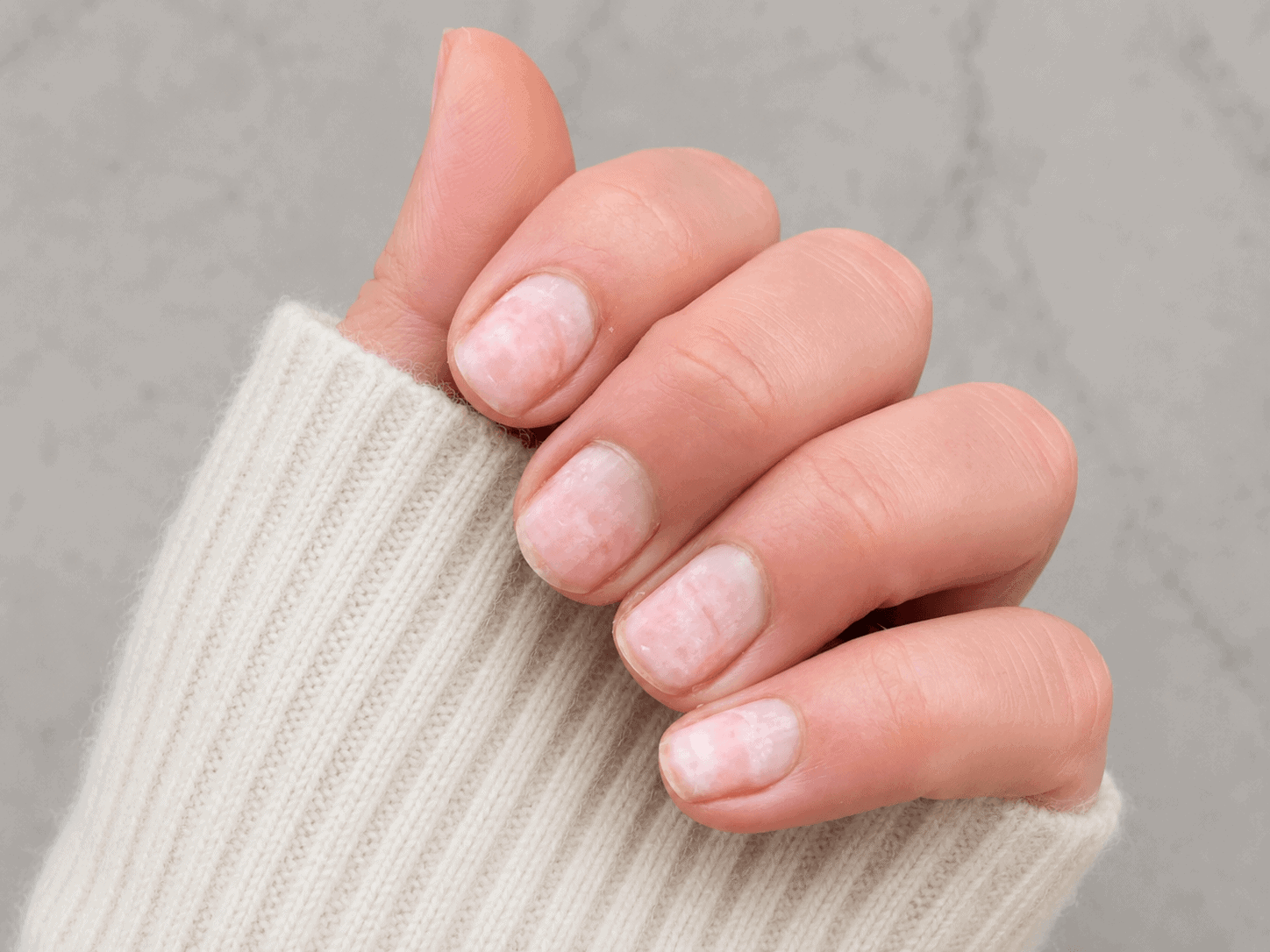
How to Strengthen Nails After Gel
What causes the damage, how long recovery actually takes, and the daily routine that gets your nails back to normal.
Read more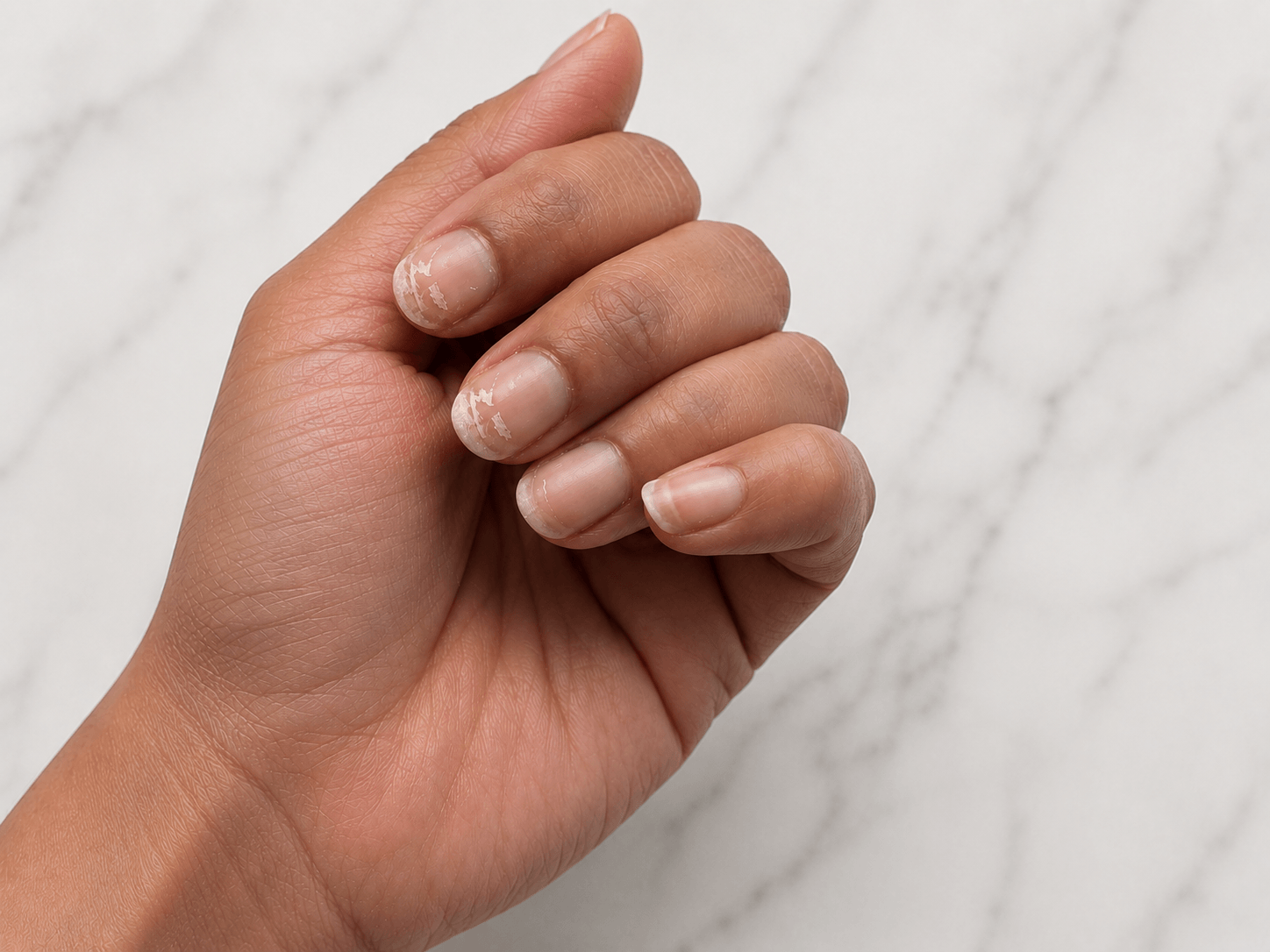
Is Gel Nail Polish Bad for Your Nails?
What the research actually says, what causes real damage and how to wear gel without the long-term downsides.
Read more