
How to Remove Acrylic Nails at Home Safely
Most of the damage I see on natural nails after acrylics was caused during removal, not application. A client comes in wanting a new set and I can see immediately that the last one was peeled off, or filed down aggressively, or removed with something that wasn’t acetone. The natural nail underneath is thin, ridged and in some cases genuinely sore.
Removing acrylic nails at home is possible without causing that kind of damage. It requires patience, the right product and a willingness to stop if something isn’t shifting easily.
Before you start
I’d always recommend salon removal first. A trained technician knows exactly how close to the natural nail they’re working, when to stop filing and what the nail plate should feel like underneath.
That said, salon removal isn’t always done well. Some technicians rush the soak and file too aggressively, taking the acrylic right down to the nail bed. The correct approach leaves an even protective layer of acrylic over the nail throughout the process. If you ever feel heat or burning during removal, ask your technician to ease off on the drill.
What you need
- 100% pure acetone (not standard nail polish remover)
- Cotton wool balls or pads
- Aluminium foil cut into fingertip-sized squares
- A glass or metal bowl if using the bowl soak method
- Coarse nail file
- Cuticle pusher or orange stick
- Petroleum jelly
- Cuticle oil
How to remove acrylic nails at home
Step 1
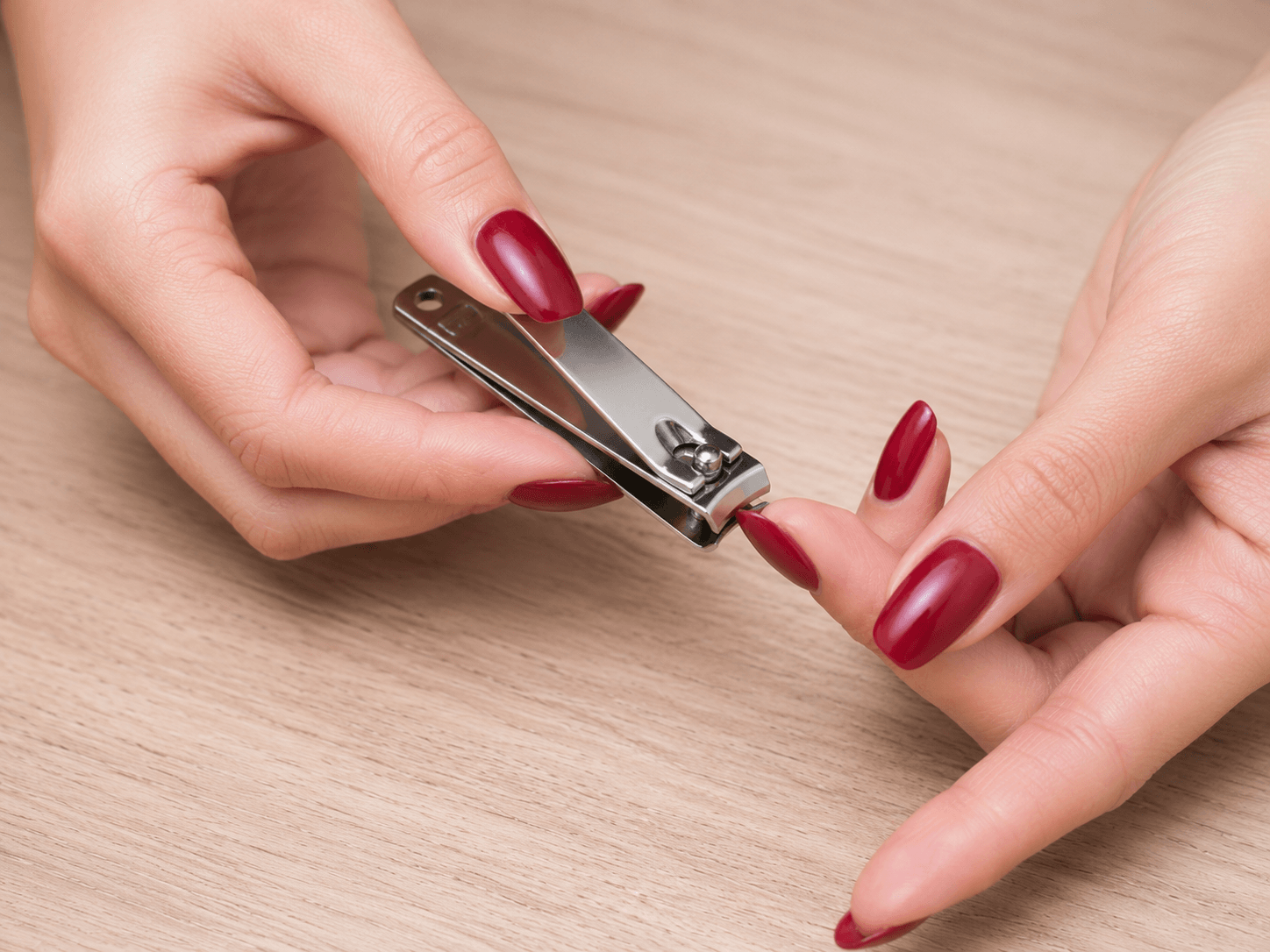
Clip down the length
Clip the acrylic as short as possible without cutting into your natural nail. Turn your palms upward and clip from both sides rather than straight across. Acrylic is dense and it’s easy to misjudge depth when your palm is facing down. Clipping straight across also causes it to crack rather than cut cleanly.
Step 2
Break the surface seal
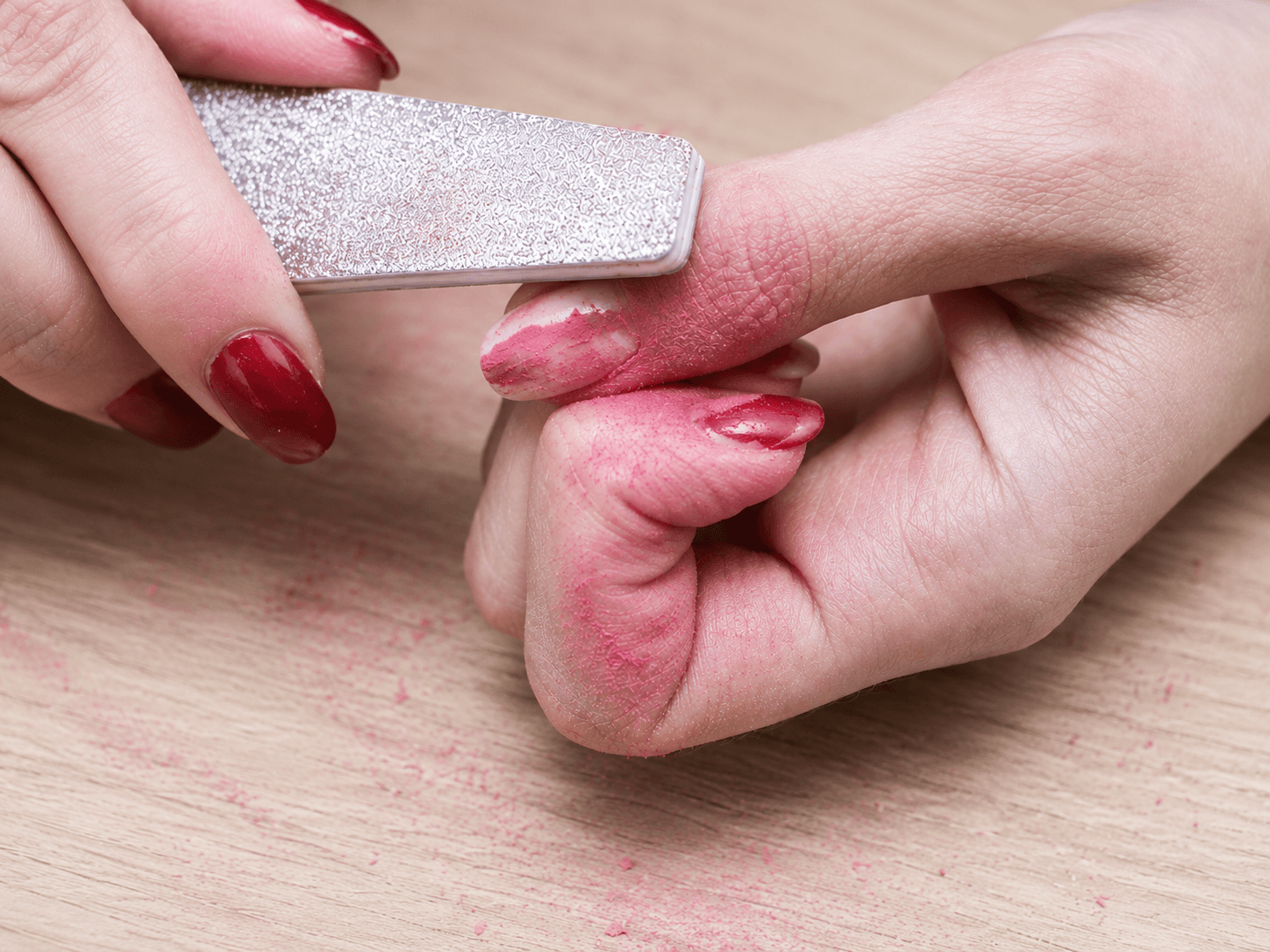
File the top surface of each nail until the shine is completely gone. You’re not filing the acrylic off, just removing the top coat so acetone can penetrate underneath. Stop when the shine is gone.
Step 3
Protect the surrounding skin
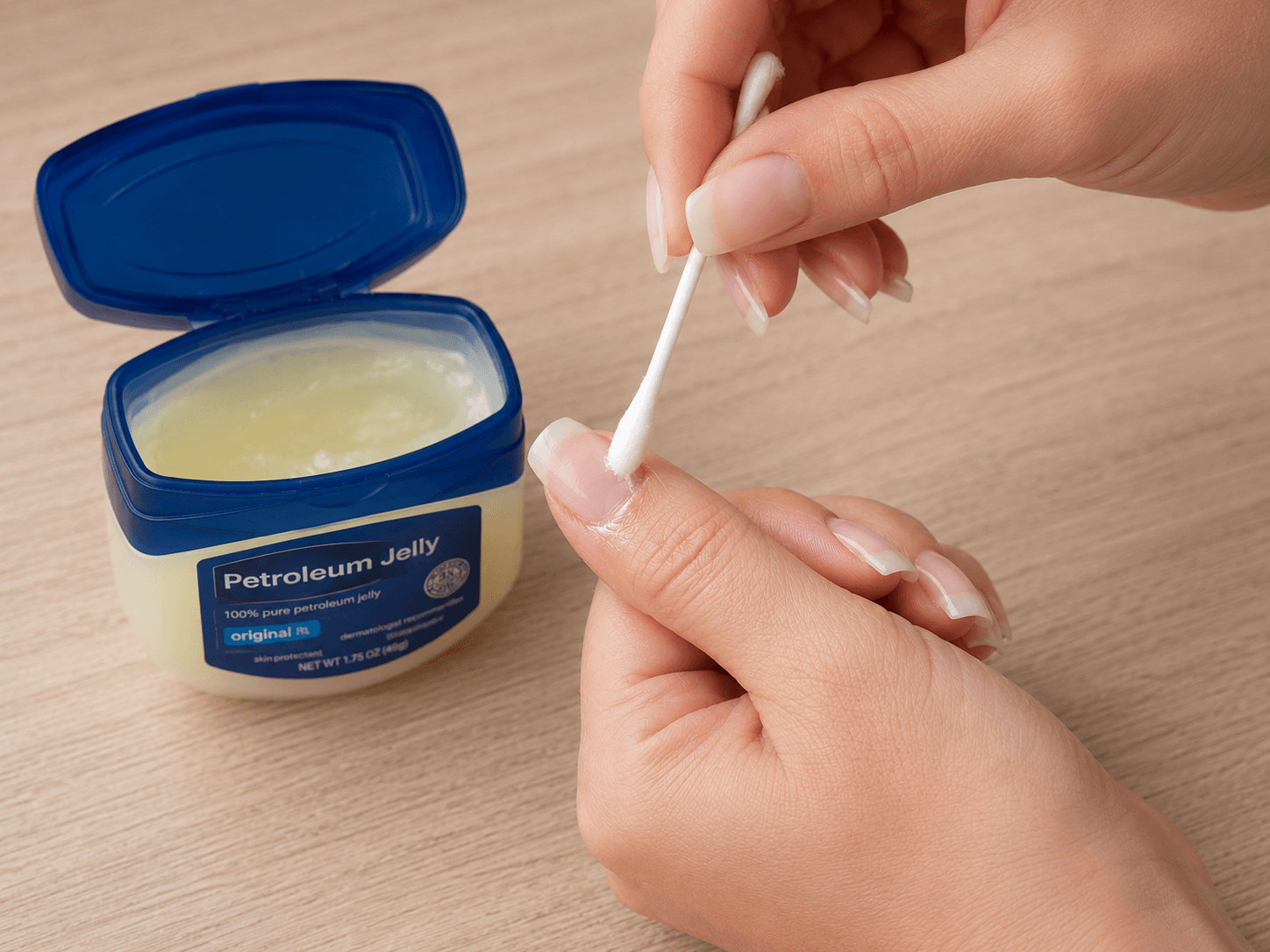
Apply petroleum jelly to the skin around each nail and to your cuticles before soaking. It acts as a barrier against the drying effect of the acetone.
Step 4
Soak the acrylic
Two methods work. Choose based on your skin sensitivity and how thick the acrylic is.
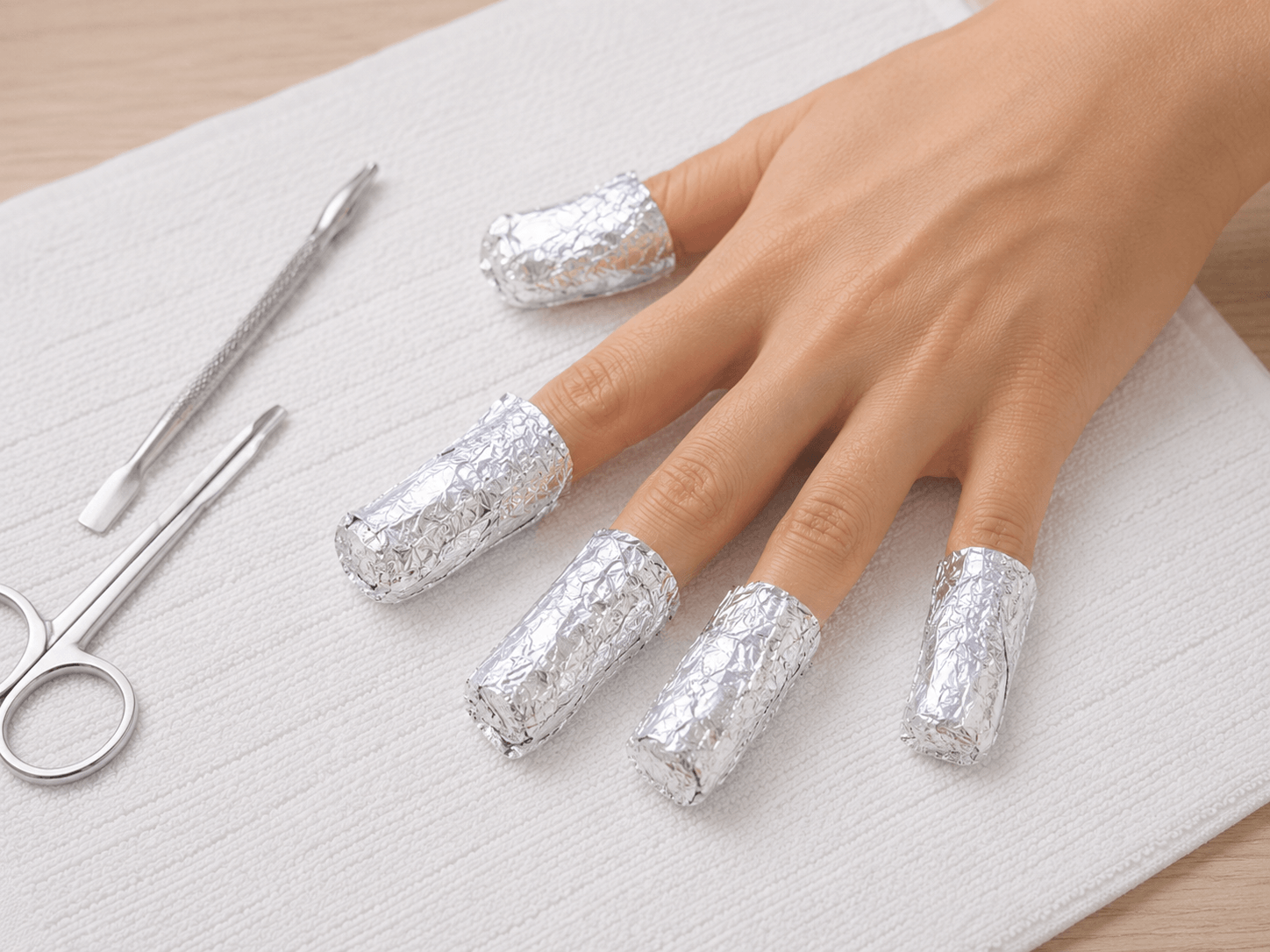
Foil wrap: Soak a cotton ball in acetone, place it on the nail and wrap the fingertip firmly in foil with no air gaps. Wait twenty minutes. Better for thinner sets or sensitive skin.
Bowl soak: Pour warm water into a bowl and place a smaller glass or metal bowl of acetone inside it. Never heat acetone directly or over a flame. Submerge your fingertips for fifteen to twenty minutes. The gentle warmth speeds up penetration and this method is more effective on thick acrylic.
Step 5
Check and remove
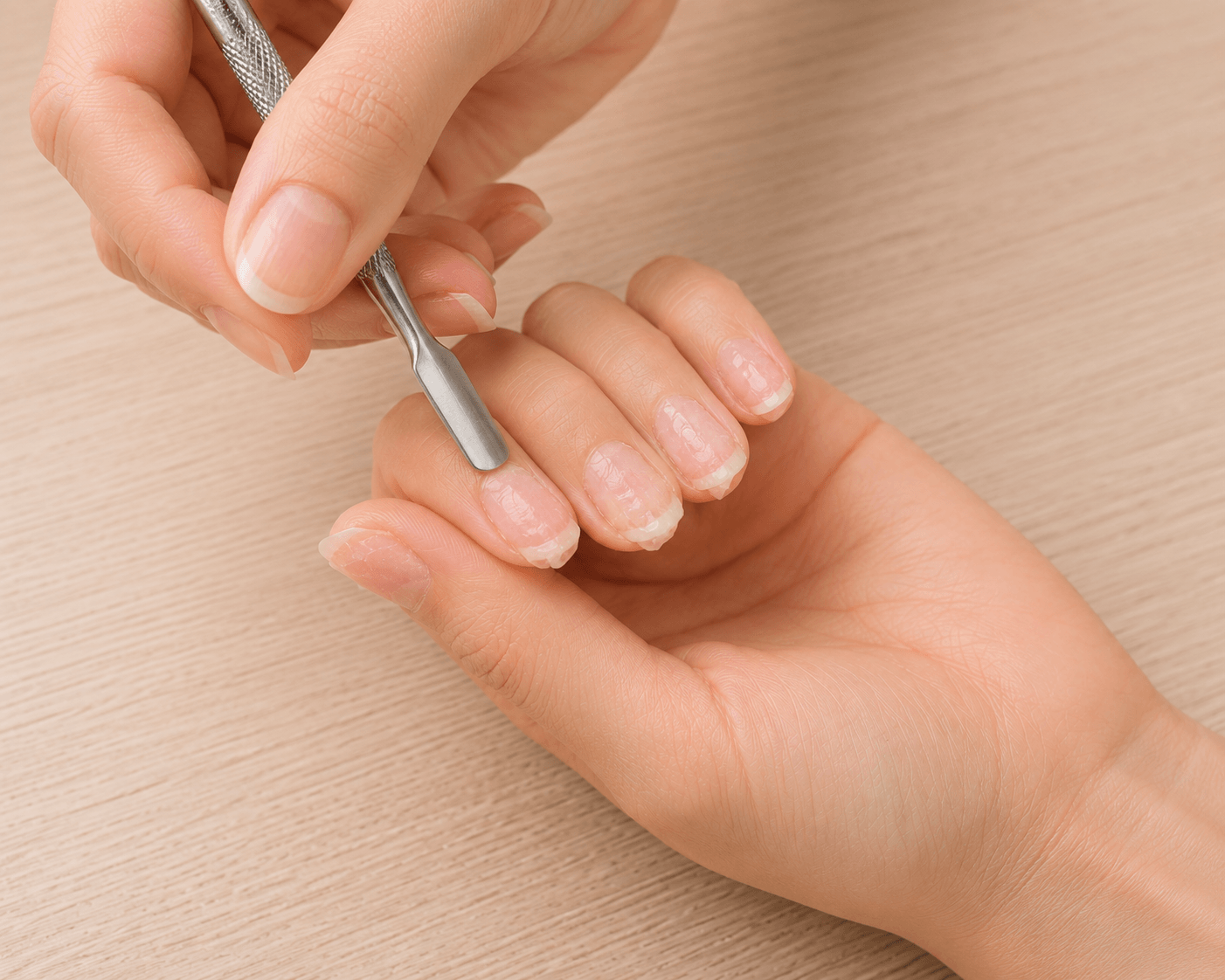
Remove one wrap or lift your fingers from the bowl. The acrylic should look soft, crumbly and slightly white. Use a cuticle pusher to gently slide the softened product toward the tip. Don’t try to clear the whole nail in one pass. Each removal thins the acrylic further, letting the acetone penetrate deeper on the next soak.
If the acrylic feels sticky or gummy, that’s normal. Top up the cotton ball with fresh acetone or re-submerge and wait another five to ten minutes. A dried-out cotton ball or depleted bowl won’t continue dissolving the product. Never force anything off. If it’s resisting, it needs more time, not more pressure.
Repeat until the nail is clear. Some nails take two passes, some take four.
Step 6
Finish and hydrate
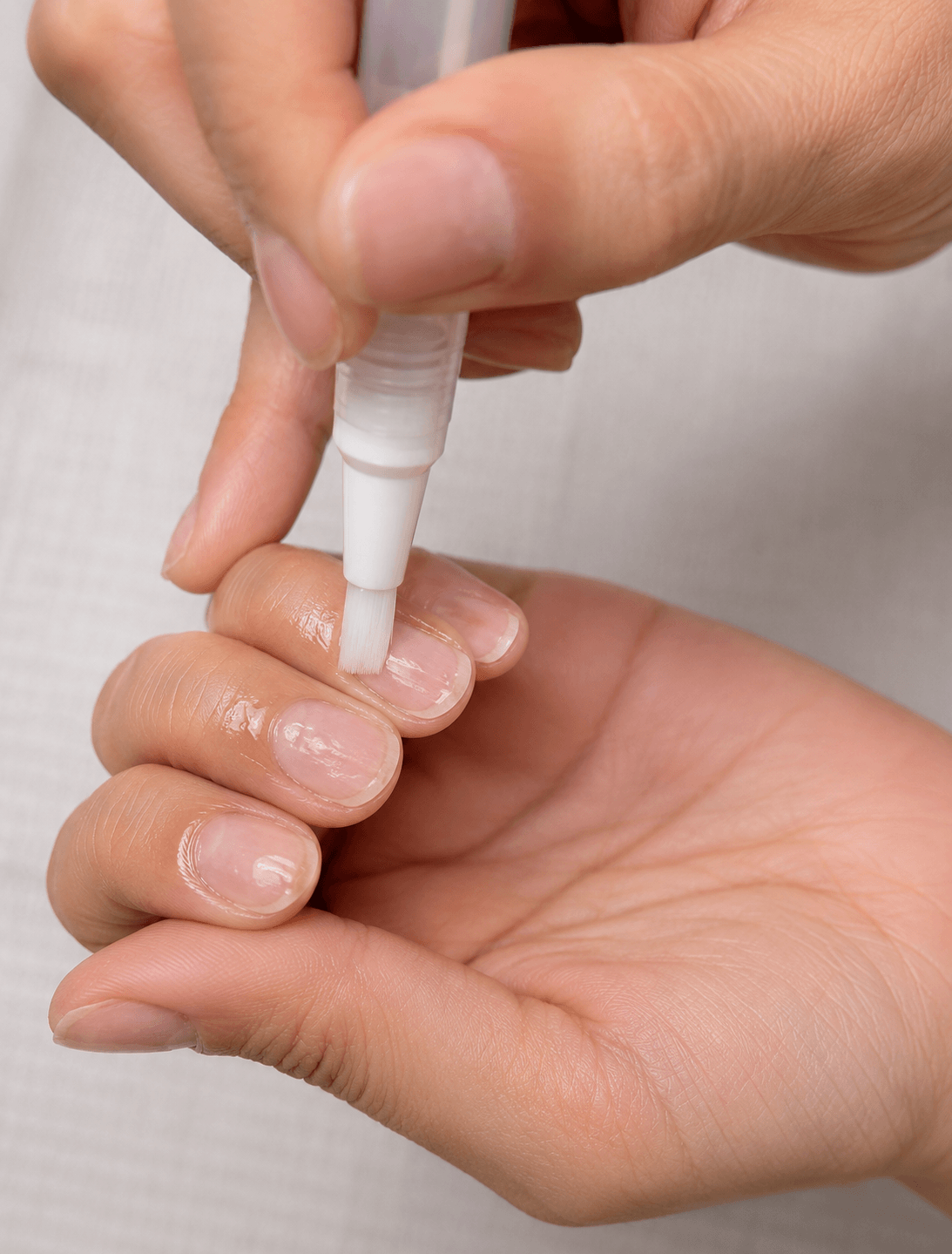
Buff the nail surface lightly to remove any remaining residue and apply cuticle oil to every nail immediately.
What not to do
Peeling and pulling is the single most damaging thing you can do. Acrylic bonds directly to the keratin layers of the nail plate and pulling it off takes those layers with it. The thinning and ridging that results can take months to grow out.
Dental floss removal circulates online as a hack. It levers the acrylic off rather than dissolving it and causes the same damage as peeling.
Heating acetone directly or over a flame is dangerous. Acetone vapour is flammable and direct heat increases fume concentration significantly. The warm water bath method is safe because the acetone is warmed indirectly at a low temperature. That distinction matters.
Acetone safety at home
Work near an open window or in a well-ventilated room. Fumes in a small enclosed space can cause headaches, dizziness and nausea during a twenty-minute soak. Keep acetone away from candles, hobs and open flames.
Acetone does not permanently damage the nail plate. It temporarily removes surface oils and moisture, which is why nails feel dry afterwards, but it does not alter keratin or cause lasting harm when used correctly.
What your nails will look like after
Thin, dry and probably slightly white. This is normal after weeks under acrylic and a long acetone soak. Cuticle oil applied immediately and daily will begin restoring moisture quickly.
If you see significant ridging, white patches that don’t resolve with oil, or any nail feels genuinely sore, those are signs the removal caused damage and a technician should take a look.
After removal care
Apply cuticle oil every day. Keep your nails short — a thin nail plate breaks more easily at length and a break sets recovery back. Avoid further acetone exposure for at least two weeks and use a strengthening base coat if you want colour.
If your nails are very thin or flexible, a BIAB or builder gel overlay from a technician adds structure and support while the natural nail recovers underneath. Most post-removal guides don’t mention this and it makes a real difference.
When to go to a salon instead
If the acrylic has lifted significantly or looks too thick to shift safely at home, professional removal is the better choice. Thick or damaged acrylics are harder to dissolve evenly and more likely to need filing that risks reaching the natural nail.
If you notice redness, swelling or any discharge around the nail, stop and see a professional. These are signs of potential infection and need a different response entirely.
Related articles
Acrylic Nails: The Honest Guide from a Nail Tech
What acrylics are genuinely good for, the real downsides, what to watch out for in the salon and who they actually suit.
Read more
How Long Do Acrylic Nails Last? A Nail Tech Answers
The difference between infill intervals and how long you can keep the same set, and what shortens wear time.
Read more
Gel Nails vs Acrylic: Which Is Right for You
How the two formats compare on longevity, natural look, nail health, cost, time and UV exposure.
Read more