
Simple Summer Beach Nails That Actually Last
Every June, the same conversation plays out in the salon. Someone is going on holiday in two weeks and wants nails that will actually survive it. The answer is almost always simpler than what they came in thinking they wanted.
Keep it short
The beach is not the place for length. Sand works into the edges of longer nails and accelerates lifting. Longer shapes snag on towels, swimsuit ties and sun cream lids in a way short nails simply don’t.
The squoval or soft oval at or just past the fingertip is the shape I’d go back to every time for a holiday. It stays out of the way, it doesn’t break, and whatever colour you put on it looks clean for longer.
The format matters more than anything
Regular nail polish will not survive a week at the beach. It softens in saltwater, lifts at the edges, and by day three it looks like something went wrong. If you’re heading somewhere with a pool, gel is the minimum. It handles chlorine and saltwater significantly better and lasts two to three weeks without chipping.
BIAB is the stronger choice if you have naturally weak nails. The added structure means less chance of a break mid-holiday when you’re an hour from the nearest salon. The finish grows out cleanly, which matters more on a two-week trip than it does at home.
Book your appointment the day before you travel, not the morning of. A fresh manicure needs time to fully settle before it’s exposed to luggage, seat belts and airport security trays.
The colours worth choosing
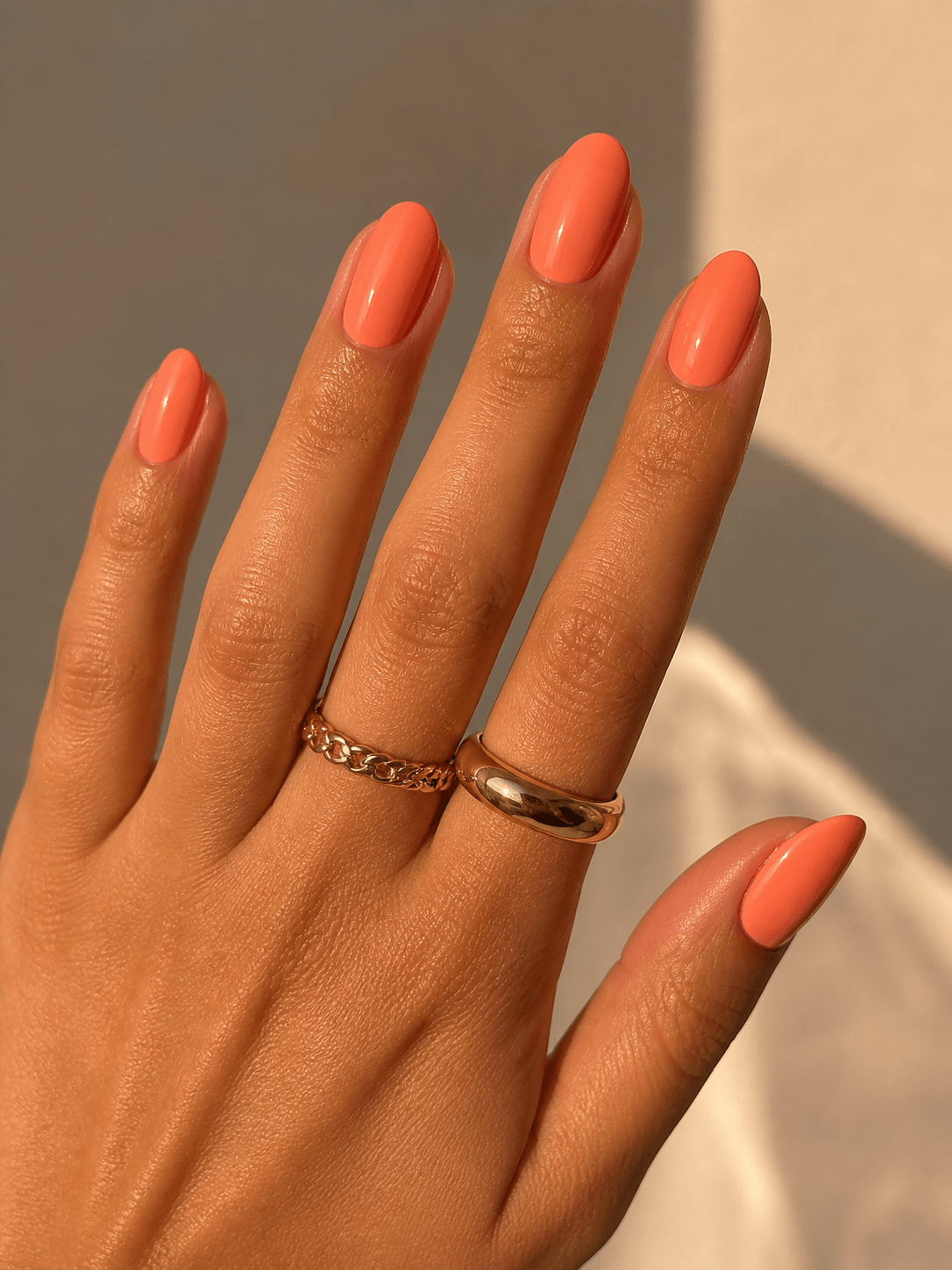
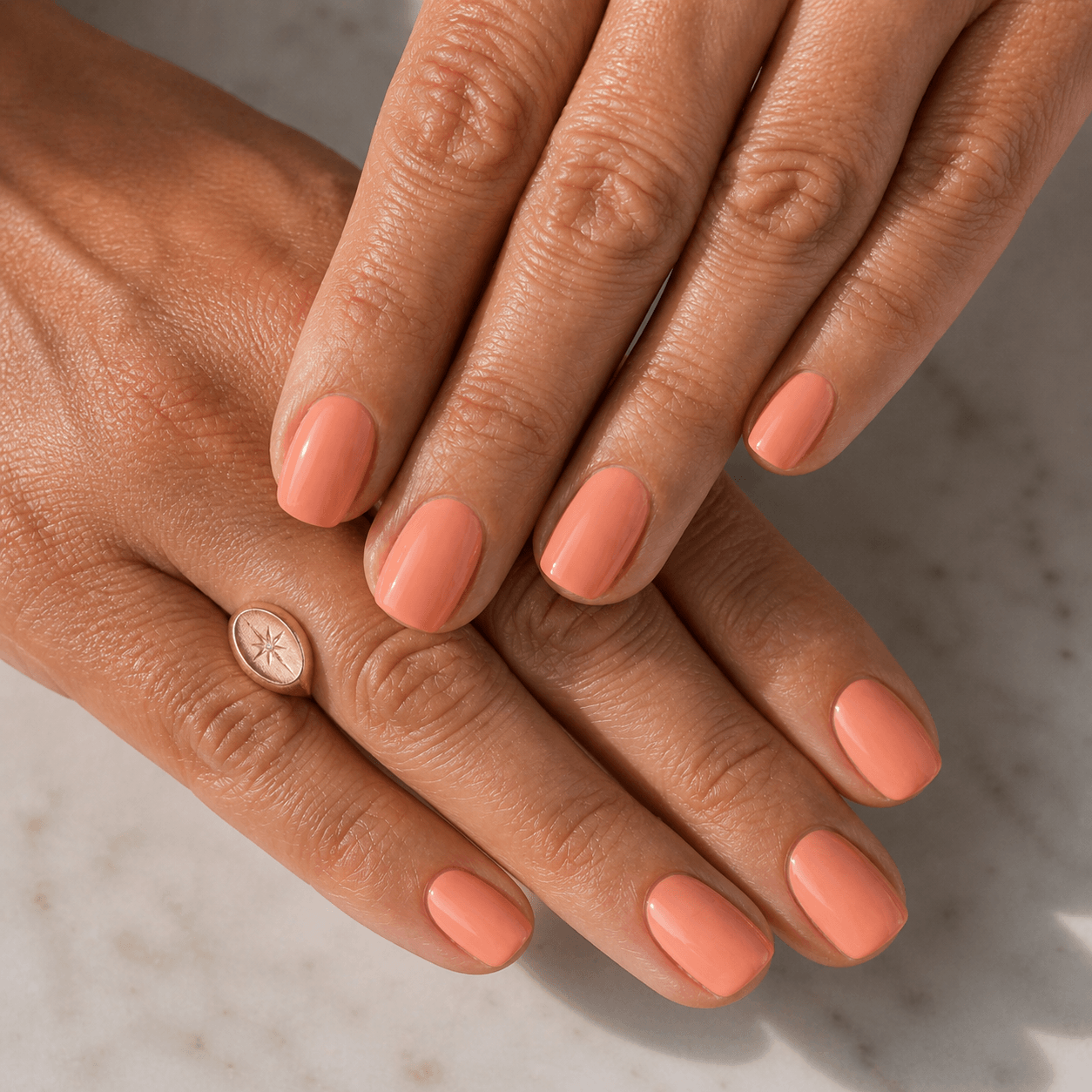
Coral
The most reliably flattering beach shade there is. It works against a tan, it works before one develops, and it photographs well in every light condition a beach holiday creates. The 2026 version leans slightly more orange than pink, which gives it more warmth.
No nail art needed. A clean coat of coral does everything on its own.
Sheer and jelly finishes
The practical choice most people overlook. A translucent coral or watery bright loses far less than an opaque shade when it starts to wear, because there’s less solid colour to chip away from. The grow-out is almost invisible.
For beach nails specifically, sheer is genuinely the smarter option and it’s exactly where summer 2026 is heading anyway.
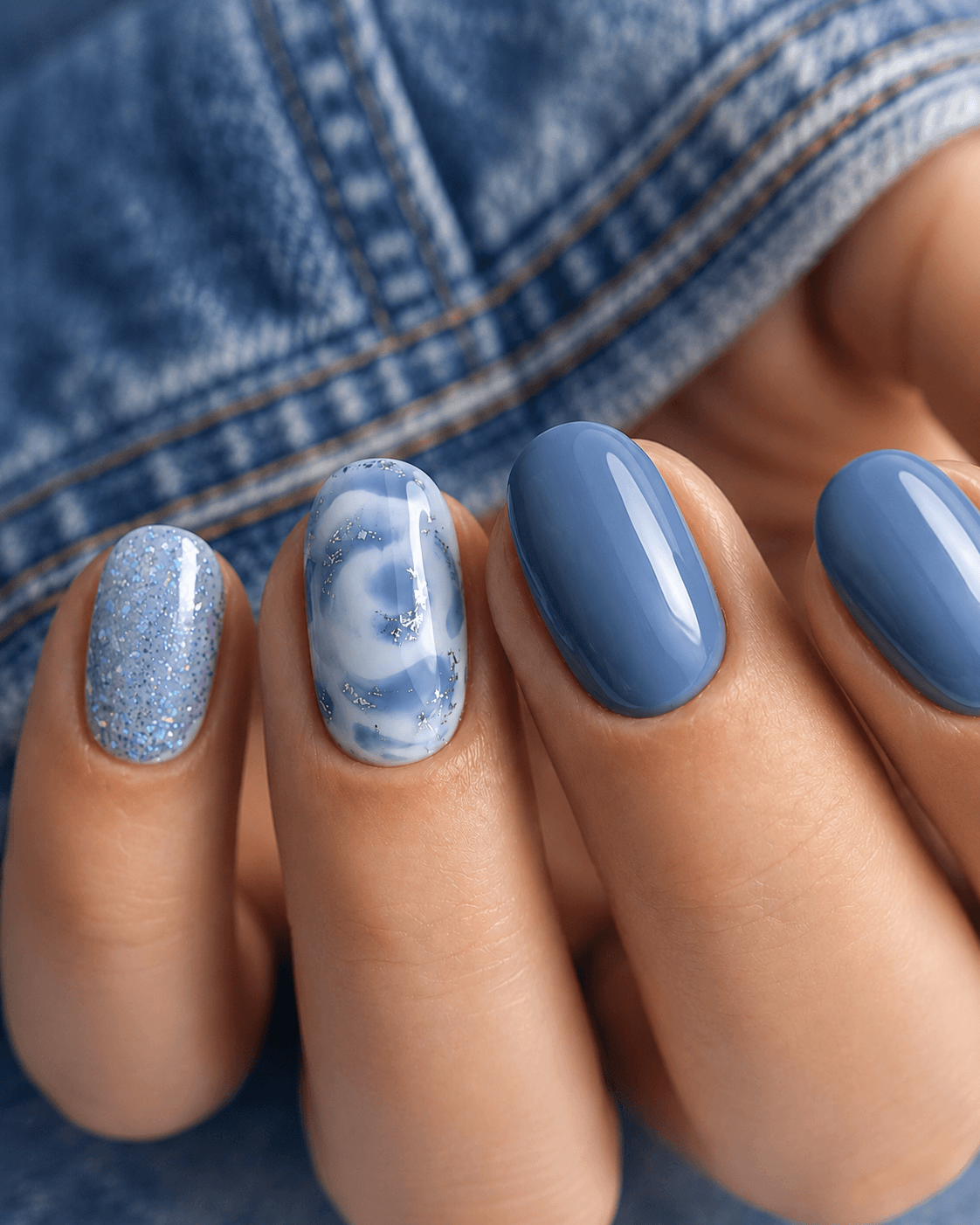
Cornflower and denim blue
The shade I’d point clients toward if they want something a little different. There’s something specific about how a cool blue reads against summer skin and white sand that a pink or coral doesn’t quite replicate.
Clean, simple, and one of the better holiday colours I’ve seen come through the salon this year.
Tomato red
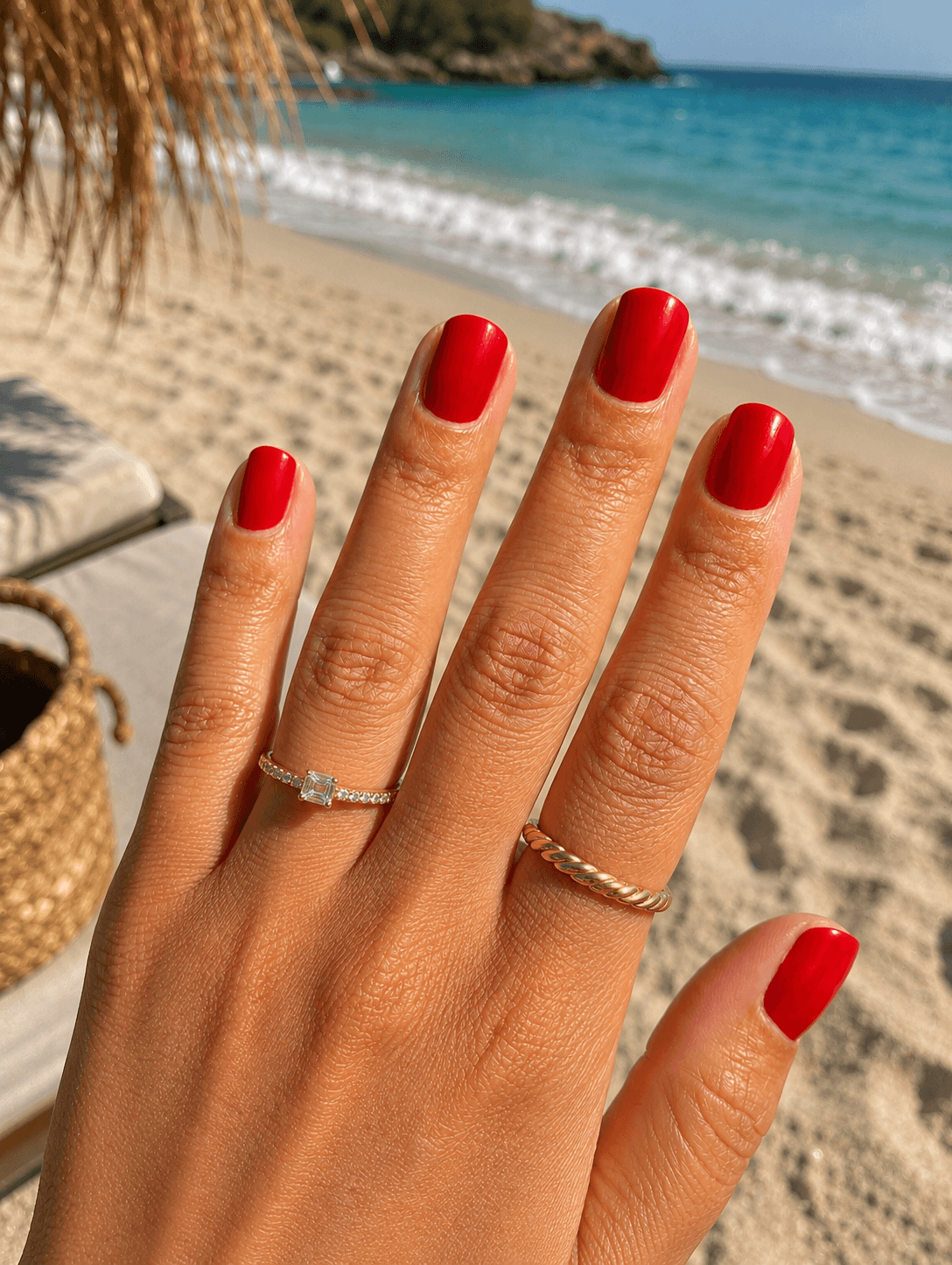
The bold option that earns its place. Saturated enough to withstand sun exposure, warm enough to work against a tan, and simple enough to need no nail art to back it up.
One of the rare shades that photographs as well at the beach as it does anywhere else.
Simple designs that travel well
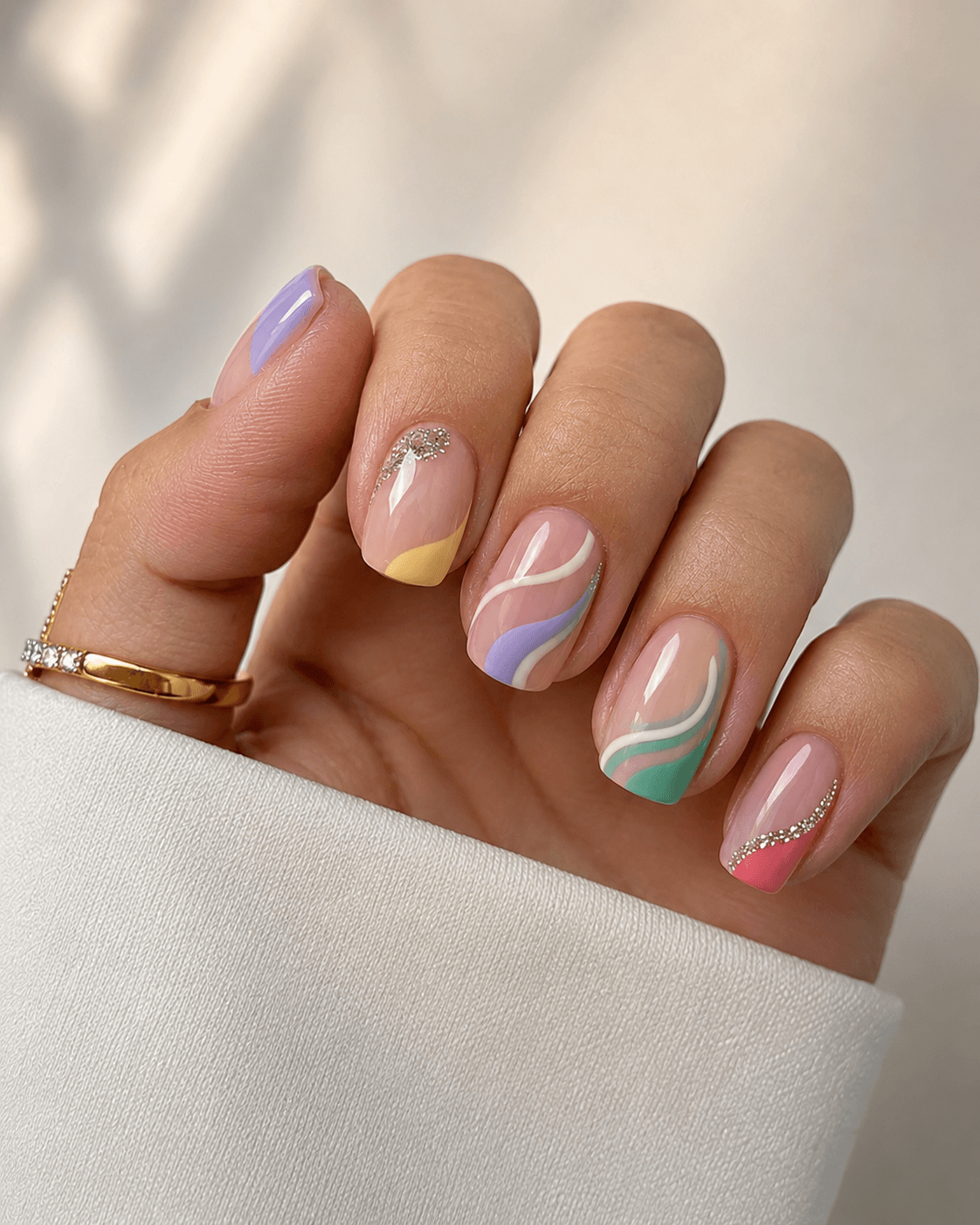
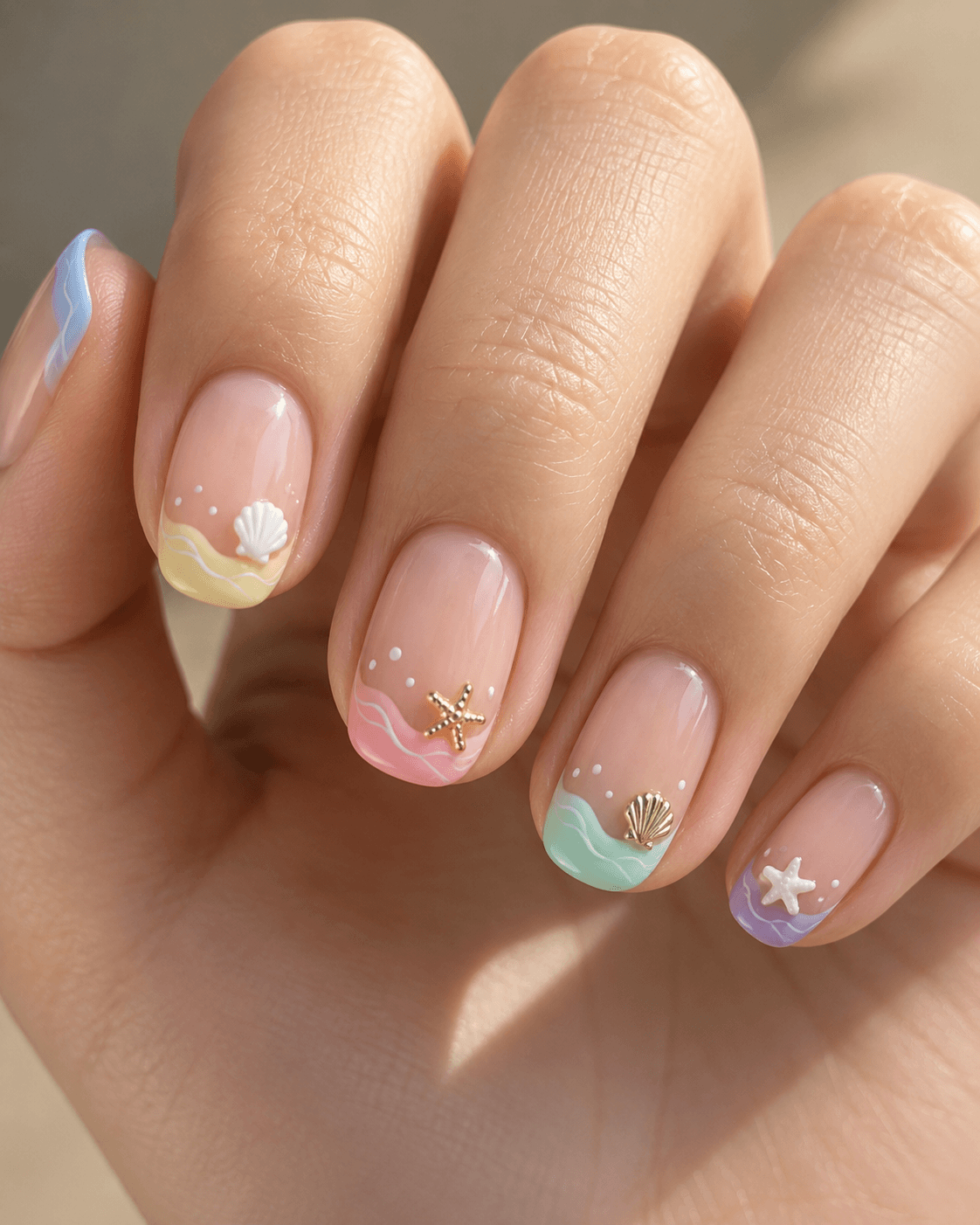
Some clients want more than a solid colour but don’t want anything that requires maintenance. These are the designs I’d suggest.
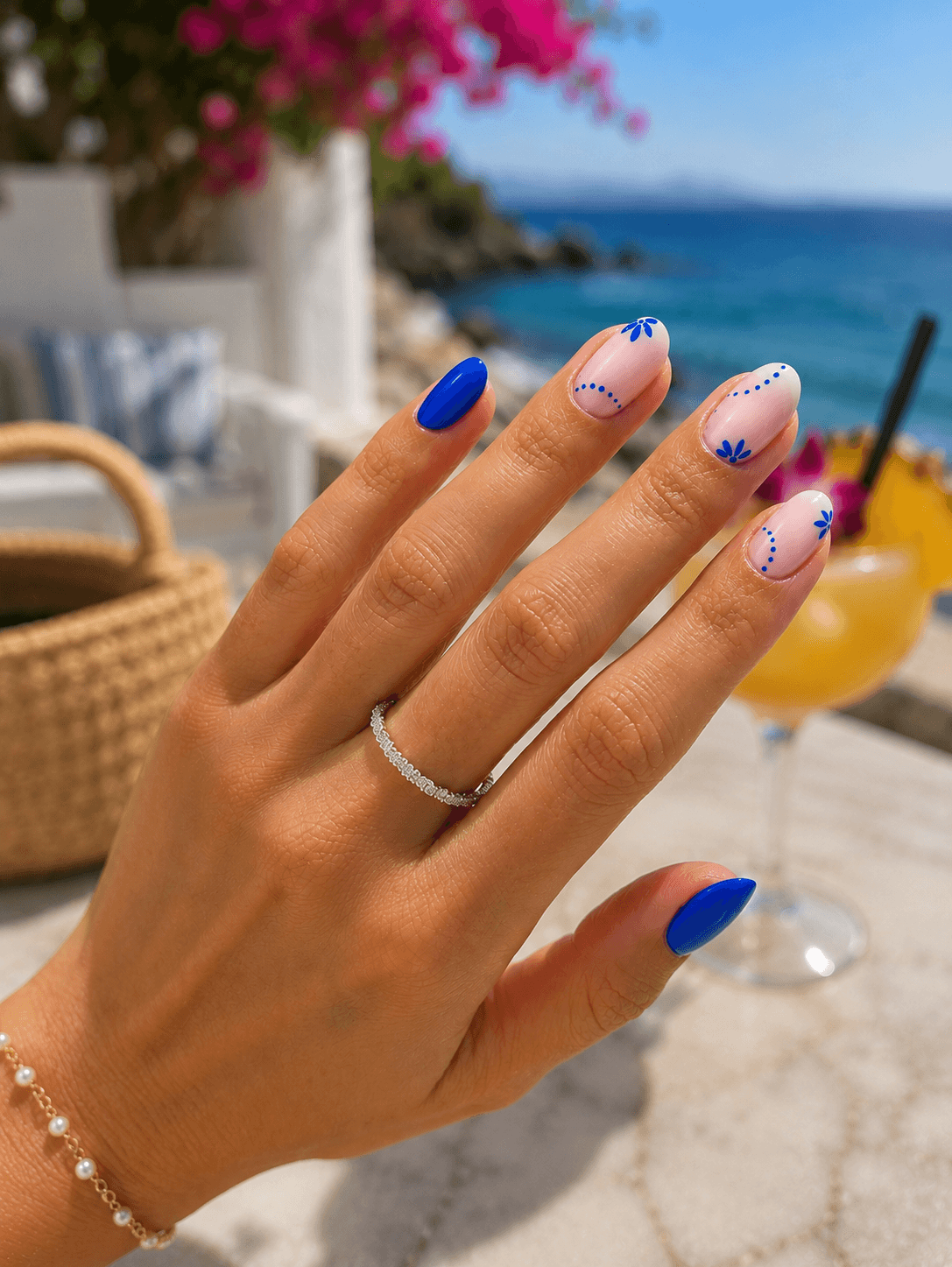
Micro-French tip. A very fine coloured tip on a sheer or nude base. Understated enough to work for every occasion on a trip and simple enough that minor wear at the tip edge barely registers.
Single accent nail. One nail in a contrasting shade or a slightly bolder version of the base colour. Quick to apply, easy to touch up, and it reads as intentional rather than accidental.
Minimal dot or stripe. A single horizontal stripe across one nail, or a small dot detail on the ring finger. Clean, graphic, and far more forgiving when it starts to grow out than anything painted freehand across the whole nail.
All three work best on a gel base with a solid top coat seal. The simpler the design, the better it survives a week of sand, sun cream and swimming.
What the beach does to lighter shades
This is the part most nail content leaves out. White nails, pale pastels and sheer tones are the most vulnerable to UV yellowing. Sunlight breaks down the pigment in polish formulas over time, and chlorine accelerates the process. A soft white pedicure that looks perfect on day one can look faintly yellow by day five.
If you want white or pale shades, a gel formula gives the best protection available. Rinsing your hands with fresh water after swimming slows the damage from both saltwater and chlorine and is the most practical thing you can do to extend wear on holiday.
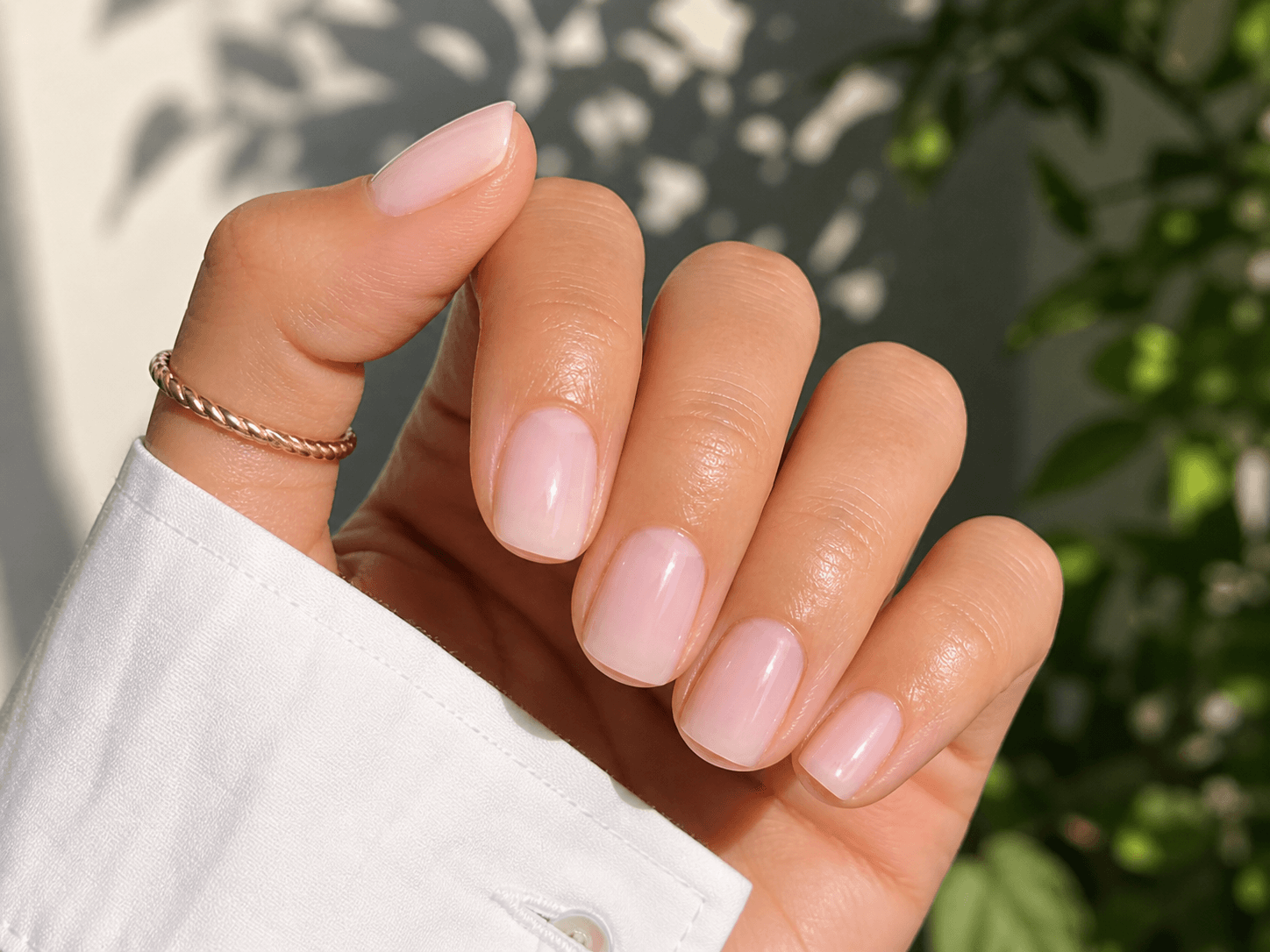
For paler clients who want a light shade, a warm milky nude reads as cleaner for longer than a bright white and doesn’t carry the same yellowing risk.
What to skip
Intricate nail art. Fine lines, detailed florals and painted accents are the first things to show wear at the edges. A chip on a solid colour is barely noticeable. A chip on a hand-painted design is immediately obvious. Simple solid colour, cleanly applied, always outlasts anything more complex on a beach holiday.
Long nails with pointed shapes. They look good in photographs and break in practice.
Regular lacquer. It softens in saltwater, and a week of swimming will lift it from the edges before the holiday is half done.
Related articles
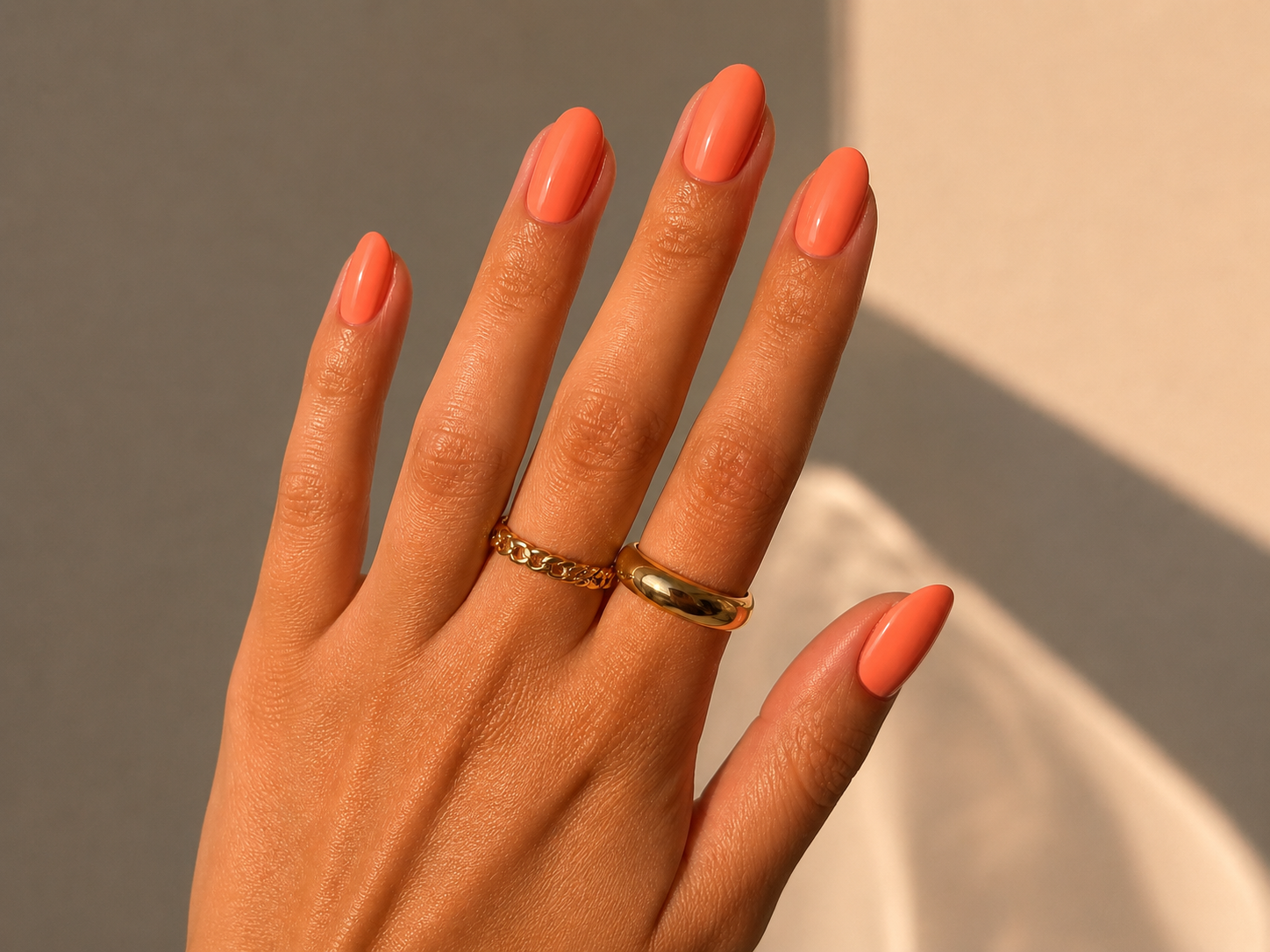
Coral Nails: Which Shade Actually Works for You
Coral works on every skin tone but not every coral works on every skin tone. Undertone is the difference.
Read more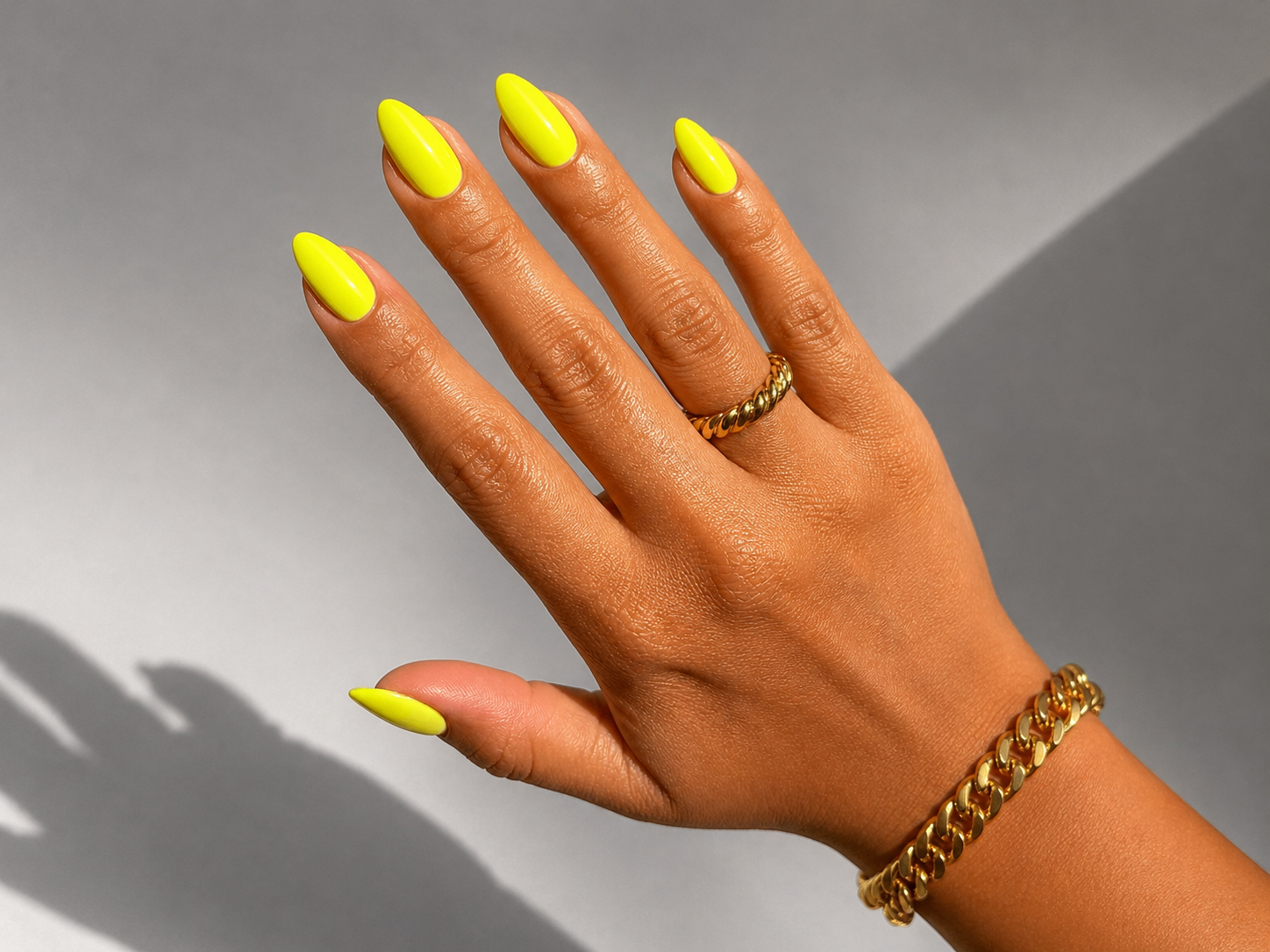
Neon Nails: Which Shade Actually Works for You
Which neon shade works depends more on your undertone than you’d think. Here’s the honest guide.
Read more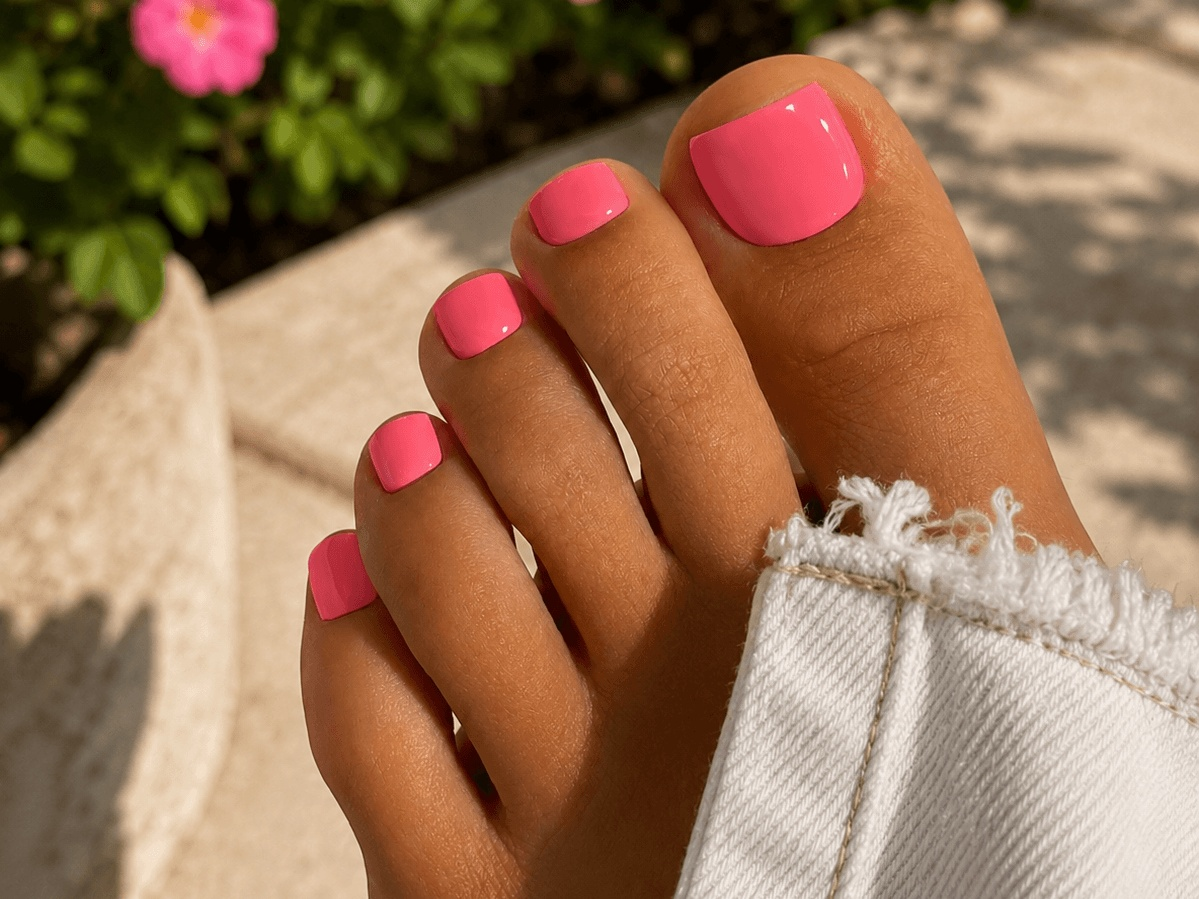
Bright Summer Pedicure Colours That Actually Work
If your manicure is staying minimal this year, your pedicure doesn’t have to. Here’s what I’d recommend for bright summer pedicure colours in 2026.
Read more