Brittle Nails: Causes, Treatments and How to Prevent Them
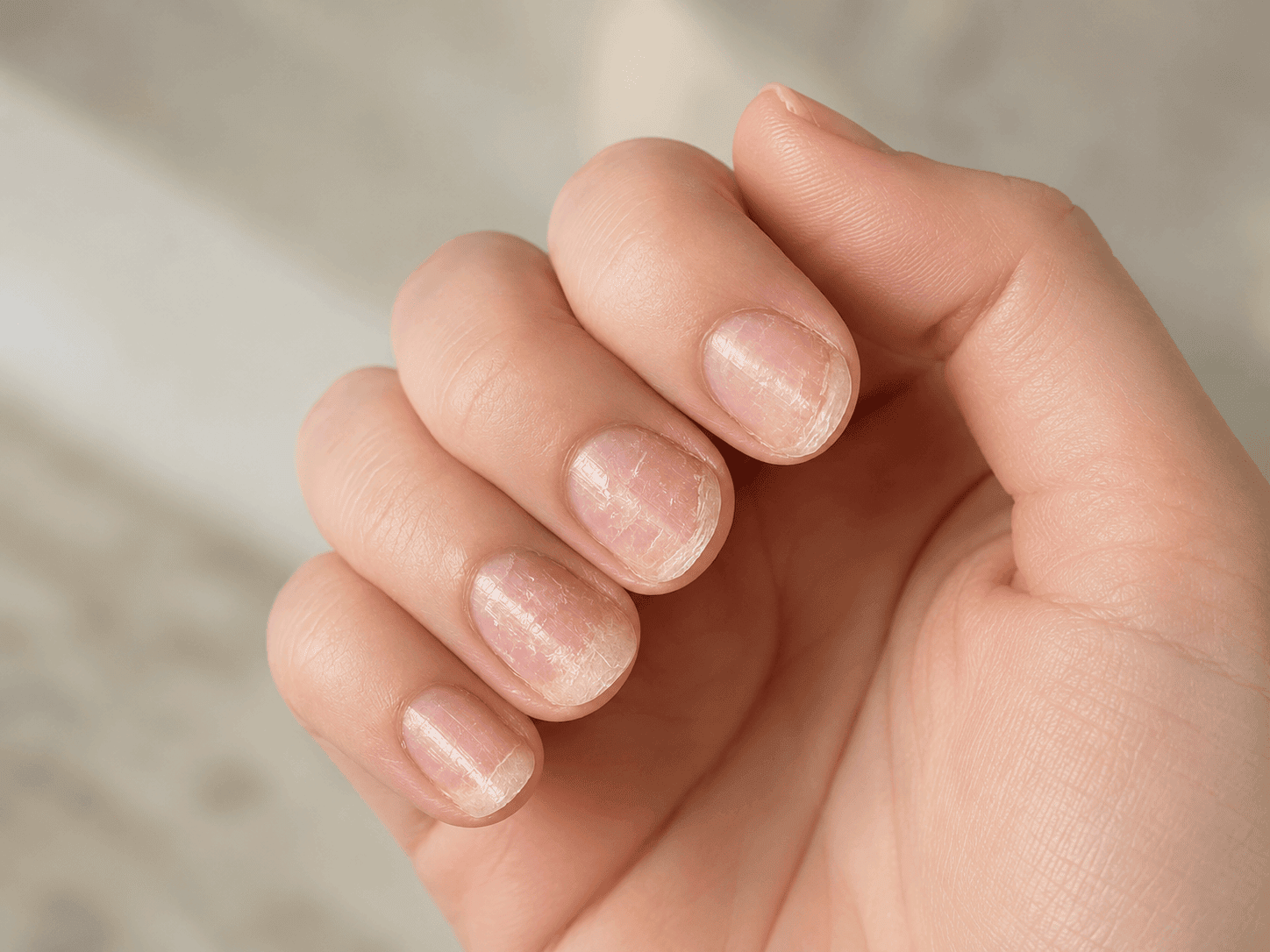
I can usually tell within a few seconds of looking at someone’s hands whether their brittle nails have an external cause or an internal one. The texture gives it away before they’ve said anything. Soft and peeling at the edges means something different to hard and snapping clean across the nail.
The Question Worth Asking First
One of the first things I ask when a client mentions brittle nails is whether their toenails are the same. It sounds like an odd question, but the answer tells me almost everything I need to know.
If your fingernails are splitting and your toenails are fine, the cause is almost certainly external. Something your hands are being exposed to that your feet aren’t. If both are brittle, the cause is more likely internal, a nutritional deficiency, a systemic condition, a hormonal issue, and no amount of nail strengthener will make a meaningful difference until that’s addressed.
External Causes
Water is the most common culprit, and not in the way most people expect. The nail plate expands when it absorbs water and contracts as it dries, and that repeated cycle gradually breaks down the keratin bonds over time. Dishwashing, frequent handwashing without gloves, long baths or regular swimming are the habits that quietly thin nails over months without anyone noticing.
Cleaning products and detergents accelerate this by stripping the nail’s natural oils on top of the moisture disruption. Nail polish remover, particularly acetone used frequently, also does the same.
Nails also grow more slowly as we age, which means each part of the nail plate spends longer being worn down before new nail replaces it. That’s not something you can change, but knowing it helps explain why brittle nails become more common after fifty even when nothing else has changed.
Internal Causes
If brittle nails aren’t responding to anything practical, iron deficiency anaemia and hypothyroidism are the two medical causes I’d look at first. Both show up in a standard GP blood test and both have nail changes as a recognised symptom.
Thyroid function and nail texture
An underactive thyroid tends to make nails brittle and hard, prone to snapping. An overactive thyroid tends to make them soft and flexible, prone to tearing. The texture is different and so is the way they fail. If brittle nails are accompanied by fatigue, hair thinning or feeling cold all the time, ask your GP to check your thyroid when you go.
Nutritional deficiencies, particularly iron, zinc and protein, slow keratin production and reduce nail quality. Diet during periods of illness or sustained stress often shows up in the nails weeks or months later, which is why the timing can seem completely disconnected from anything obvious.
What to Do About It
For external causes the fix is reducing exposure and restoring hydration. Gloves for washing up removes the most consistent source of damage. Cuticle oil applied daily keeps the nail plate and surrounding skin flexible. A nail strengthener with keratin or calcium adds useful support for a few weeks.
A note on nail strengtheners
Many strengtheners contain formaldehyde as the hardening agent, which works in the short term but makes nails progressively more rigid with continuous use. A nail that can’t flex at all will snap under pressure rather than bend, which is a different kind of breakage to what you started with. Two weeks on, then switch to a flexible base coat.
Filing technique matters more than most people realise. A fine grit or glass file used in one direction creates a clean edge. Sawing back and forth with a coarse file creates micro-fractures at the free edge that start the peeling process long before the nail has grown anywhere useful.
For internal causes, topical products are managing symptoms rather than solving anything. Treating the underlying condition is what actually changes nail quality, and recovery after addressing something like iron deficiency or a thyroid issue typically takes three to six months before it becomes visible in the nail.
When to See a GP
See your GP if both fingernails and toenails are affected without an obvious external explanation. See them if you’ve addressed the practical habits consistently for a couple of months and nothing has improved. See them if brittle nails are accompanied by fatigue, hair thinning, weight changes or persistent cold sensitivity.
A blood test covering iron, ferritin, thyroid function and zinc covers most of the common systemic causes in one appointment. It either rules things out or points you in the right direction.
Prevention
Most of this is habit rather than product. Gloves at the sink, cuticle oil every day, acetone kept to what’s genuinely necessary, and a diet with adequate protein and iron. The how to strengthen nails after gel guide covers the full recovery routine if your nails are coming back from a difficult period. The principles are the same whether the damage came from gel removal or from years of daily wear.
Brittle nails are common and mostly fixable. The ones that don’t respond to basic care are usually telling you something, and a blood test is a faster answer than another bottle of strengthener.